Considering how popular the Dragon Hill Lodge is, I would not be surprised if from the US side these talks get slow rolled as much as possible:
The Dragon Hill Lodge at Yongsan Garrison
There was sharp criticism from the city of Seoul and civic groups that leaving the 240,000㎡ ROK-US CFC on the site of the Yongsan Garrison would cause the park that will be built there after the land is returned to South Korea to end up looking malformed. South Korea and the US bowed to the pressure by agreeing at the end of last year to move ROK-US CFC to a building on the precincts of South Korea’s Ministry of Defense, located nearby. The relocation of the ROK-US CFC to the Defense Ministry grounds is reportedly supposed to be completed within the year.
On the other hand, little progress has reportedly been made in deliberations between South Korea and the US about relocating the Dragon Hill Lodge, which is located on the grounds of the base. The original agreement was for the 84,000㎡ resort to remain at Yongsan regardless of the base’s relocation. But recently, objections have been raised about leaving a US military facility that is not open to South Koreans at the center of the planned park.“There have not been any official discussions, and we are currently exchanging opinions,” said Defense Ministry spokesperson Choi Hyeon-su when asked about this in April. [Hankyoreh]
ROK-US Combined Forces Command has a new Deputy Chief of Staff! ROK Army MG Cho, Young-Jin received the Legion of Merit before relinquishing responsibility to ROK Army MG Shin, Sang-Bum. MG Shin will work side-by-side with LTG Michael A. Bills, who serves both as the CFC Chief of Staff and the Eighth Army-Korea Commanding General. Welcome to the team MG Shin! [USFK Facebook]
Much like the closing of Yongsan Garrison, Camp Red Cloud in Uijongbu is getting closer to closing as well:
Col. Brandon Newton, garrison commander of Camp Red Cloud and other bases north of Seoul, South Korea, stands in front of a color guard during the garrison’s inactivation ceremony, Thursday, June 21, 2018. KIM GAMEL/STARS AND STRIPES
Soldiers stood in formation as the garrison’s colors were cased Thursday in a ceremony officials said marked an important step toward closing this Korean War-era base and reducing the U.S. footprint north of Seoul.
The inactivation of Camp Red Cloud, which remains home to the 2nd Infantry Division, was a largely administrative move aimed at consolidating resources as the Army steps up much-delayed plans to move most forces to its new hub in the southern half of the country.
But Col. Brandon Newton, who served for the past two years as the final garrison commander of the area that includes Red Cloud and Camp Casey, stressed the process was well underway.
“The details of the way that we return bases are more complex than just the casing of the colors,” he said in an interview after the ceremony on the parade ground. “We’re certainly on the lead edge of what I would consider the vacating of Camp Red Cloud. Vacating and closing a camp is about a year’s process.” [Stars & Stripes]
You can read much more at the link, but according to the article the 2nd Infantry Division headquarters is going to remain at Camp Red Cloud for quite some time due to (drum roll please)……… building delays at Camp Humphreys. Anyone shocked by that news?
By the way for those wondering how Camp Red Cloud was named I recommend reading the below link:
The U.S. military’s main command in South Korea will officially open its new headquarters next Friday in Pyeongtaek, 40 miles south of its current home in Yongsan District, central Seoul, marking a major milestone in the relocation of the U.S. Forces Korea.
Seoul’s Ministry of National Defense announced Thursday that the opening will be celebrated with a ceremony at the new headquarters compound, in which South Korean and U.S. military officials will participate. The ministry did not disclose the list of invitees, but U.S. Secretary of Defense James Mattis arrives in Seoul next Thursday for a meeting with his South Korean counterpart, Song Young-moo, and local media assumes he’s on it.
The relocation of the headquarters follows a years-long process of moving the U.S. Forces Korea from the Yongsan Garrison in central Seoul to Camp Humphreys in Pyeongtaek, a rural city in Gyeonggi. The 8th U.S. Army relocated its headquarters from Yongsan to Pyeongtaek in July 2017.
Seoul and Washington agreed to the transition in May 2003 and set a deadline for 2020. Local authorities plan to build an ecological park at the garrison site in Yongsan once the transition is complete, with the hopes of opening the park for public use by 2027.
The new headquarters is composed of a four-story main building and a two-story annex, taking up 240,000 square meters (59.3 acres) in total. A ministry official said some other buildings on Camp Humphreys were still under construction, but are most likely to be completed by the 2020 deadline. [Joong Ang Ilbo]
You can read more at the link, but how much of Yongsan Garrison do people think will actually become an ecological park?
South Korea and the United States have decided to suspend the Ulchi Freedom Guardian (UFG) exercise slated for August, Seoul’s defense ministry said Tuesday, amid dialogue efforts to denuclearize North Korea.
Shortly after his Singapore summit with North Korean leader Kim Jong-un last Tuesday, U.S. President Donald Trump unveiled his plan to stop “provocative, inappropriate and expensive” war games with the South, which Pyongyang has decried as an invasion rehearsal.
“Following close cooperation, South Korea and the U.S. decided to suspend all planning activities for the UFG, the defensive exercise slated for August,” the ministry said in a text message sent to reporters. [Korea Times]
You can read more at the link, but remember these joint exercises like UFG can be turned right back on if the North Koreans shows signs of not negotiating in good faith.
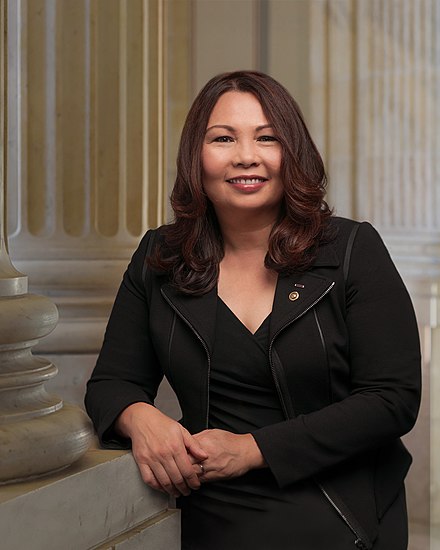
A pair of Democratic senators on Wednesday introduced an amendment to the annual defense policy bill that would stop President Trump from withdrawing U.S. forces from South Korea without the Pentagon’s input.
The amendment “would help prevent the President from making a rash decision about troop reductions on the Korean Peninsula that negatively impacts our national security,” Sens. Tammy Duckworth (Ill.) and Chris Murphy (Conn.) said in a joint statement.
Introduced for the Fiscal 2019 National Defense Authorization Act (NDAA), the provision would stop a withdraw “unless the U.S. Secretary of Defense certifies it is in our national security interest and would not significantly undermine the security of our allies in the region.” [The Hill]
Over at the Diplomat there is an interesting article published about former US President Jimmy Carter’s failed attempt to remove US ground troops from South Korea during his term in office:
South Korean President Park Chung Hee, right, leads American President Jimmy Carter to his awaiting helicopter after Carter arrived for two days of talks in Korea (June 29, 1979).
With U.S. President Donald Trump once more touting his desire to withdraw the 28,500 U.S. troops currently stationed in South Korea, it is perhaps worthwhile briefly examining the last time an American president attempted to remove U.S. forces from the Korean Peninsula. U.S. President Jimmy Carter in the late 1970s was ultimately stopped by congressional obstruction, the Pentagon, and the intelligence community, among others, from implementing a troop withdrawal policy he had repeatedly promised during his presidential campaign in 1976. Put otherwise, and to use 21st century Trumpian parlance: the so-called “deep state” stopped Carter from executing his plans.
During the 1976 presidential campaign — the same year two American soldiers were axed to death by North Korean soldiers in the demilitarized zone — Carter repeatedly voiced his desire to pull out the 40,000 American soldiers (out of which only 15,000 were combat troops) from South Korea, where they served as a de factotripwire to deter a North Korean invasion. For example, at a Foreign Policy Association luncheon that year Carter declared: “I believe that it will be possible to withdraw our ground forces from South Korea on a phased basis over a time span to be determined after consultation with both South Korea and Japan.” [The Diplomat via a reader tip]
You can read much more at the link, but basically the intelligence community changed its assessment to state that North Korea had a military advantage over South Korea and removing US ground troops would only increase their advantage. This gave opponents of Carter’s troop removal plan the backing they needed to oppose and eventually stop it. President Carter has always been skeptical of the assessment and how the bureaucracy circled the wagons to stop his troop withdrawal strategy.
Carter wanted to pull out the ground troops to put pressure on South Korean President Park Chung-hee to implement democratic reforms. Carter may have failed in his quest to remove US ground troops, but he did indirectly succeed in getting Park Chung-hee removed from office. In October 1979, Park was assassinated by the Korean CIA chief Kim Jae-gyu as part of a coup attempt against him. After the coup attempt failed, Kim said one of the reasons for the coup was to restore the US-ROK relationship that had been so badly damaged by Park’s rule.
So are there any lessons President Trump could learn from Carter’s failed bid to remove US ground troops from Korea if he decides to do that? I don’t think so because of how different the circumstances are. It is clear today that South Korea has a conventional military advantage over North Korea thus muting concerns that US military leadership may have. When former Defense Secretary Donald Rumsfeld moved entire combat brigade from South Korea in 2004 to send to Iraq there was little pushback because of the ROK military advantage.
If President Trump does decide to remove US troops from Korea as part of a larger deal over North Korea’s nuclear weapons, I suspect there would be little pushback compared to what Carter experienced.
As I have been saying the suspension of joint exercises with South Korea is something that is easily reversible and can be used as negotiating leverage against the Kim regime:
Secretary of State Mike Pompeo, left, toasts North Korean officials, including Vice-Chairman of the Central Committee Kim Yong Chol, in New York City, May 30, 2018.
President Donald Trump will resume military exercises with South Korea if the North stops negotiating in good faith over its nuclear weapons program, the top U.S. diplomat said Wednesday.
The tempered expectations were markedly different from the optimistic tone set by Trump in a series of tweets earlier in the day. [Stars & Stripes]
You can read more at the link, but I think we will know whether North Korea is negotiating in good faith by the Key Resolve exercise timeframe early next year. If North Korea is not making any irreversible progress towards denuclearization I would expect this exercise would be executed as scheduled.
Forget all the talk about denuclearization on the Korean peninsula following the Trump-Kim Summit in Singapore, the biggest news for me is President Trump announcing the stopping of joint military exercises:
U.S. President Donald Trump speaks during a press conference in Singapore on June 12, 2018, in this photo captured from the website of The Straits Times. (Yonhap)
U.S. President Donald Trump said Tuesday that he will stop “provocative and expensive” war games with South Korea in a surprise reference to the joint military exercises Pyongyang has criticized as a rehearsal of invasion.
Trump made the remarks during a press conference that followed his historic summit with North Korean leader Kim Jong-un on the Singaporean resort island of Sentosa.
“War games are very expensive,” he said, raising the issue of their cost.
“I think it is very provocative … You have a country that is right next door,” he added, referring to the communist state. [Yonhap]
You can read more at the link, but President Moon has previously said that UFG would be scaled down and now President Trump has used to word stopped. I guess we will see what this all means, but for now it is pretty clear that the August UFG exercise will not happen the way it is normally executed.
If the joint exercises are stopped this is a big win for President Moon. His left wing base does not support the exercises while the political opposition conservative party does. So Moon’s base gets what it wants, for now and Moon can tell his political opposition that he was not the one that cancelled the joint exercises, President Trump did.
These joint exercise are important for USFK due to the high change over in personnel on the peninsula which these exercises help to keep personnel trained with their ROK military counterparts. However, just like everything that North Korea has committed to cancelling joint exercises are easily reversible from the US perspective. I don’t see President Trump committing to something non-reversible like troop withdrawals from the peninsula until the Kim regime does something non-reversible such as removing nuclear material to a third country for disposal.
It should continue to be an interesting year to see how this all plays out.
There was a horrible accident over the weekend outside of Yongsan Garrison’s Gate 13:
Military Police investigate the site of a fatal car crash outside Gate 13 at Yongsan Garrison in Seoul, South Korea, on Saturday, June 9, 2018.
An American family headed to a high school graduation ceremony on Yongsan Garrison was struck by tragedy on Saturday when their car was involved in a fatal collision with a motorcycle.
The crash, which occurred outside Gate 13, killed two people — one American and the South Korean motorcycle driver — and injured another American, garrison spokesman Wes Hayes told Stars and Stripes.
Hayes declined to identify the casualties and said the cause of the crash remained under investigation.
“Our hearts and prayers go out to all the victims of this tragic accident today,” Hayes said.
Many members of the community gathered at a chapel on post after the graduation ceremony to console each other and grieve.
A person at the chapel said the fatality was an American girl who was with her family on the way to watch her brother graduate from Seoul American High School. Her father, a civilian, was reportedly in critical condition. [Stars & Stripes]
You can read more at the link, but hat tip to ROK Head Guitard for leaving the below link that shows the aftermath of this accident:
This next video shows the injured American father asking for help:
Condolences to all the family and friends effected by this tragic accident.