Tag: missile defense

Tweet of the Day: Successful L-SAM Test

US Military Conducts Successful ICBM Missile Defense Test

Here is some strategic messaging to the Kim regime that the US does have the ability to shoot down North Korean ICBMs with its GMD system:

A pair of long-range, ground-based interceptors launch from Vandenberg Air Force Base, Calif., in the first-ever salvo engagement test of a threat-representative ICBM target, Monday, March 25, 2019.

Salvos by multiple ground interceptors shot down an intercontinental ballistic missile during a test Monday, a “milestone” first-time achievement, the U.S. Missile Defense Agency said.
Two ground-based interceptors were used in the test, MDA said in a statement Monday. The first was used to destroy the ICBM reentry vehicle.
The second interceptor “then looked at the resulting debris and remaining objects, and, not finding any other reentry vehicles, selected the next ‘most lethal object’ it could identify, and struck that, precisely as it was designed to do,” the statement said.

The target ICBM was launched from the Reagan Test Site on Kwajalein Atoll in the Marshall Islands, more than 4,000 miles from the two interceptors launched from Vandenberg Air Force Base, Calif.
Space-, ground- and sea-based sensors provided real-time target acquisition and tracking data to a command-and-control center during the test, the statement said. The interceptors were then launched beyond the Earth’s atmosphere, where they destroyed the target.

Stars & Stripes

You can read more at the link.

ROK Military Maintenance Workers Accidentally Fire Cheolmae-2 Missile Above Chuncheon

Fortunately no one was killed from this accidental firing of a Cheolmae-2 missile which is South Korea’s equivalent of a Patriot missile:

Cheolmae-2 Launcher

The inadvertent launch of an anti-aircraft missile at a military base in Chuncheon, Gangwon, on Monday was the result of maintenance accident, the South Korean Air Force said on Thursday.

After it was launched from a vehicle during a routine maintenance check, the Cheongung medium-range surface-to-air (SAM) missile exploded mid-air at around 10:38 p.m. on Monday. There were no casualties, nor was there property damage, but the accident spurred an investigation by the Air Force.

Following an on-site inspection and testimonies from witnesses, investigators concluded that the launch was unintentionally triggered by human error during a routine maintenance check. 

“During regular check-ups, mechanics are supposed to disconnect a cable plugged into the missile used in real operations and plug in a testing cable, but the communication between the mechanics was unclear and the check-up was performed without disconnecting the operational cable,” said an Air Force spokesman. “This caused the test launch signal transmitted by the mechanics’ laptop to trigger a launch, and the missile exploded mid-air around 3.5 seconds after launch due to its automatic self-destruction system.”

The missile is equipped with a mechanism that causes it to explode in the event of guidance system failures after launch, according to the Air Force’s briefing on the accident on Monday. 

Also known as the Cheolmae-2, the Cheongung SAM system was developed by the domestic arms producer Agency for Defense Development (ADD) based on the Russian 50R6 Vityaz and S-400 Triumf systems. Each missile costs around 1.5 billion won ($1.3 million) to produce, and a total budget of 1.2 trillion won has been allocated toward the project as a whole. 

Joong Ang Ilbo

You can read more at the link.

US Army Air Defense Artillery Brigade Headquarters Reactivated in Japan

I think this can be interpreted in showing how important the US Army considers missile defense for Japan that it stood up a brigade headquarters there:

Col. Patrick Costello speaks after taking command of the newly reformed 38th Air Defense Artillery Brigade at Camp Zama, Japan, Wednesday, Oct. 31, 2018.

The Army has reactivated a brigade to oversee missile-defense units on mainland Japan, Okinawa and Guam.

The 38th Air Defense Artillery Brigade was reactivated in a brief ceremony Wednesday at Camp Zama, headquarters of U.S. Army Japan in Kanagawa prefecture near Tokyo.

The brigade, based at Sagami General Depot, about 25 miles west of the Japanese capital, will oversee the 1st Battalion, 1st Air Defense Regiment at Kadena Air Base, Okinawa, as well as the 10th and 14th Missile Defense Batteries on mainland Japan and a Terminal High Altitude Area Defense, or THAAD, battery on Guam.

The unit, which will include about 115 personnel at full strength, is purely a headquarters unit, said U.S. Army Japan spokesman Kevin Krejcarek.

“It’s just personnel. There won’t be any missile batteries at Sagami,” he told Stars and Stripes ahead of Wednesday’s ceremony as protestors gathered outside Zama’s main gate.  [Stars & Stripes]

You can read more at the link, but for those wondering USFK has its own air defense artillery brigade headquarters based at Osan Airbase.

Japan’s Military Budget Requests Purchase of Two Aegis Ashore Missile Defense Systems

Based on Japan’s recent military budget proposal I think we can infer that they expect the current peace initiative between North Korea, South Korea, and the United States will not last:

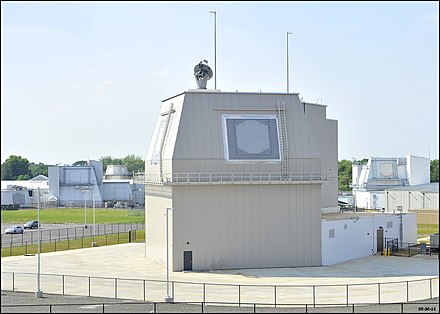
Aegis Ashore Deckhouse

Japan’s Defense Ministry is seeking to more than double spending on missile defense, including purchases of costly American arsenals, to defend against North Korean threats.

The record-high 5.3 trillion yen ($47 billion) request for fiscal 2019, approved Friday by the ministry, is up 2.1 percent from last year. The military spending has risen seven consecutive years under Prime Minister Shinzo Abe.

The request related to missile defense rises to 424 billion yen ($3.8 billion) from about 180 billion yen last year. The overall government budget plan is to be submitted for Cabinet and parliamentary approval later this year.

The final budget could still grow because the request leaves out spending to reduce Okinawan communities’ burden of hosting many of 50,000 American troops stationed on the southern island and a relocation cost for some troops to the U.S. Pacific territory of Guam.

A big chunk would buy a pair of land-based Aegis missile defense systems and a ship-to-air SM-3 Block IIA interceptor with an expanded range and accuracy developed jointly by the U.S. and Japan, as well as upgrading of fighter jets and destroyers to make them compatible with advanced interceptors.  [Stars & Stripes]

You can read more at the link.

Russia Upset That Japan is Trying to Better Defend Itself Against North Korean Missile Threats

The Russians are actually more angry at the Japanese for trying to defend themselves than at the North Koreans which are the only reason the Japanese are spending so much money on missile defense in the first place:

Japan has approved the installation of two Aegis Ashore missile defence systems to defend the country against North Korea’s growing nuclear and missile threats (AFP Photo/Daniel Mihailescu)

Russia’s deputy foreign minister Sergei Ryabkov on Saturday accused the United States of violating a key arms treaty by selling a missile defence system to Japan.

“The US is deploying them (missile defence systems) at their military bases in Romania and Poland, that is near our western borders, which goes against the 1987 INF Treaty banning the deployment of such systems on the ground,” Ryabkov said in a statement published on the Russian Foreign Ministry website.

“The fact that such complexes could now appear on Russia’s eastern borders creates a situation that we cannot ignore in our military planning,” said Ryabkov.

On Thursday, Russia’s Foreign Ministry spokeswoman Maria Zakharova said the deployment of the US missile defence system would have a negative impact on relations between Tokyo and Moscow.

“We consider the step made by the Japanese side as going against efforts of ensuring peace and stability in the region,” Zakharova said, adding that Moscow has “deep regret and serious concern” over the move.

On December 19, the Japanese government approved the installation of two land-based US-made Aegis Ashore missile defence systems to defend the country against North Korea’s growing nuclear and missile threats.  [AFP]

You can read more at the link.

Article Claims that F-35 May Help With Intercepting North Korea’s ICBMs

Here is yet another good idea fairy in regards to defeating North Korea’s ICBMs:

Rep. Duncan Hunter, R-Calif., raised more than a few eyebrows (and drew a few rolled eyes) when he suggested in November that the F-35 Joint Strike Fighter could intercept North Korean missiles headed for the United States. Hunter cited analysis from Los Alamos National Labs and other sources, according to Inside Defense.

Turns out the F-35 may be an ICBM buster after all, or at least be helpful toward that end. On Tuesday, Northrop Grumman called a small group of journalists to its offices in Linthicum, Maryland, to show the results of a 2014 experiment conducted with the Missile Defense Agency, or MDA.

The U.S. has no foolproof way to down a North Korean ICBM. Physics says the best opportunity comes during “boost phase,” as the rocket is leaving the launch pad. But DPRK anti-aircraft defenses make it difficult for the U.S. to get a weapon close enough to do any good. That’s why the Pentagon is looking at elaborate, futuristic concepts like arming drones with missile-killing lasers.

But the F-35 is studded with sensors like no other aircraft, including the Distributed Aperture System, or DAS, a half-dozen 17-pound electro-optical and infrared sensors. These feed a helmet-mounted display that allows the pilot to effectively “see through the plane” and spot incoming aircraft and missiles.

In October 2014, Northrop and MDA launched FTX-20, an experiment to see, among other things, whether the DAS could track an enemy ICBM. They took data from the sensors, ran it through algorithms developed by Northrop and MDA’s Enterprise Sensor Lab, generated a 3D-moving picture of the missile’s trajectory, and conveyed it over the Link 16 tactical data exchange. This kind of targeting data can help cue the U.S.Navy’s anti-ballistic missile destroyers or short- and intermediate-range missile defenses like the Army’s Terminal High Altitude Area Defense, or THAAD, missile battery deployed in South Korea.  [Defense One]

You can read the rest at the link, but feeding data to Patriot, Aegis, and THAAD systems will not defeat North Korea’s ICBMs.  These systems are not designed to intercept ICBMs, the Ground-based Midcourse Defense (GMD) system is.  That is why people who understand missile defense would have rolled their eyes at Rep. Hunter’s claim.

Additionally even the feeding of data to these systems to help with cueing the sensors to North Korean launches is of little value considering the US already has two AN/TPY-2 radar sites in Japan that provide much better cueing data.  This all adds up to limited value of the capability the F-35 provides in regards to North Korea launches.

President Trump Wanted Japan to Shoot Down North Korean Missile Flying Over Japan

This is something that many people who don’t understand missile defense think until they realize the physics behind it:

U.S. President Donald Trump has said Japan should have shot down the North Korean missiles that flew over the country before landing in the Pacific Ocean earlier this year, diplomatic sources have said, despite the difficulties and potential ramifications of doing so.

The revelation came ahead of Trump’s arrival in Japan on Sunday at the start of his five-nation trip to Asia. Threats from North Korea’s nuclear weapons and missile development programs were set to be high on the agenda in his talks with Prime Minister Shinzo Abe on Monday.

Trump questioned Japan’s decision not to shoot down the missiles when he met or spoke by phone with leaders from Southeast Asian countries over recent months to discuss how to respond to the threats from North Korea, the sources said.

The U.S. president said he could not understand why a country of samurai warriors did not shoot down the missiles, the sources said.  [Japan Times]

You can read more at the link, but the reason is quite simple why the missiles were not shot down.  The missile were flying 770 kilometers above the country in outer space; this is higher than the international space station.  The Japanese Aegis ships and Patriot interceptors cannot engage missiles flying that high. To shoot down the missiles the Aegis ship would have to be located out in the ocean where the missile was coming down at.  There is no way the Japanese would could have known when and where North Korea was going to fire the missile at to have a ship sitting there waiting to shoot it down.

The real story here is why are diplomatic sources leaking this information to the news media?  This is a natural question that many people wondered initially after North Korea fired the missile over Japan.  I would hope by now someone has briefed President Trump on missile defense capabilities.

Why the US and Japan Do Not Shoot Down North Korea’s Ballistic Missiles

The article is bias with some inaccurate information from someone who is anti-missile defense, however it repeats something I have said before that the US and Japan cannot shoot down North Korea’s missiles unless you know where they are going.  This is because the Aegis system the US and Japan has do not shoot down missiles on the boost phase which is what a missile traveling over Japan is at.  These ships defend the territory of Japan if the missile was to come down on it in the terminal phase of flight.  It is the same for the THAAD system, unless the missile is coming down on South Korea or on Guam in its terminal phase the THAAD systems in each of those locations cannot shoot down North Korea’s missiles:

Joe Cirincione

The number one reason we don’t shoot down North Korea’s missiles is that we cannot.

Officials like to reassure their publics about our defense to these missiles. Japanese Chief Cabinet Secretary Yoshihide Suga toldhis nation after last week’s test, “We didn’t intercept it because no damage to Japanese territory was expected.”

That is half true. The missile did not pose a serious threat. It flewover the Japanese island of Hokkaido, landing 3700 km (2300 miles) from its launch point near North Korea’s capital of Pyongyang.

The key word here is “over.” Like way over. Like 770 kilometers (475 miles) over Japan at the apogee of its flight path. Neither Japan nor the United States could have intercepted the missile. None of the theater ballistic missile defense weapons in existence can reach that high. It is hundreds of kilometers too high for the Aegis interceptors deployed on Navy ships off Japan. Even higher for the THAAD systems in South Korea and Guam. Way too high for the Patriot systems in Japan, which engage largely within the atmosphere.

All of these are basically designed to hit a missile in the post-mid-course or terminal phase, when it is on its way down, coming more or less straight at the defending system. Patriot is meant to protect relatively small areas such as ports or air bases; THAADdefends a larger area; the advanced Aegis system theoretically could defend thousands of square kilometers.  [Defense One]

You can read more at the link.

Dozens Injured After Korean Protesters Removed to Allow Deployment of Additional THAAD Launchers

After all the months of drama in regards to this issue, the THAAD launchers are finally in:

U.S. military vehicle moves as South Korean police officers try to block residents and protesters who oppose to deploy an advanced U.S. missile defense system called Terminal High Altitude Area Defense, or THAAD, in Seongju, South Korea, Thursday, Sept. 7, 2017.

I guess the next concern from USFK will be whether the road to the THAAD site will remain open or is this a one time police presence to open the road?  If so the helicopter resupplies to the site will have to continue:

Thousands of South Korean police were deployed near the THAAD site, which is in a remote southeastern area of the country, to clear the way for the U.S. convoy carrying the four additional launchers and other equipment on Thursday.

Scuffles broke out when hundreds of protesters tried to block the path to the former golf course that now houses THAAD. Local health and fire officials said dozens of people suffered mostly minor injuries.

The defense ministry said that, despite the protests, the THAAD deployment was completed.

Officials stressed it was a “tentative” measure resulting from the urgent threat posed by North Korea and a decision on maintaining THAAD will be made after a full environmental impact assessment is completed.  [Stars & Stripes]

You can read more at the link.