Any ROK Heads in Seoul interested in serving on this council that the Seoul government is trying to establish?:
Seoul Metropolitan Government said Monday it would begin accepting applications from foreign residents of the capital to create a representative body for consultations. The body will be made up of 45 people and will advise the local government on policies to meet the needs of foreign residents and interracial families.
“Migrant workers, foreign students, foreign spouses, adoptees or refugees can apply for the positions,” a city official said.
The representatives will serve a three-year term and collect foreign residents’ opinions on issues such as human rights, cultural diversity and the living environment.
Those wanting to become the members should be over 18 years old, have stayed in Korea for more than a year and in Seoul for more than 90 days, and be recommended by at least 10 other foreign residents. [Korea Times]
Cho Hee-yeon, superintendent of the Seoul Metropolitan Office of Education, leaves the Seoul High Court on Sept. 4, 2015, after the appeals court convicted him of running a smear campaign during last year’s election but suspended his sentence. If the Supreme Court confirms the ruling, Cho will be able to keep his job. A lower court in April fined Cho 5 million won (US$4,600) for spreading false rumors about his rival, Koh Seung-duk, during the election campaign. (Yonhap)
Parents of college aspirants take part in a Buddhist prayer at the main hall of Jogye Temple in Seoul on Aug. 4, 2015, to wish for their high scores on the state-administered annual scholastic aptitude test in November. The crucial test is seen as a deciding factor in an applicant’s choice of college and subsequent career. (Yonhap)
I guess we will see how strictly enforced these new measures are on South Korean teachers:
Teachers found guilty of committing sex offenses will be deprived of their teacher’s license, the Seoul Metropolitan Office of Education (SMOE) said, Thursday.
The office said it will take a zero-tolerance approach to sex offenses by teachers.
The measure came after a group of male teachers at a public high school in Seoul were recently accused of sexually harassing female teachers and students for more than a year.
“Schools should be the safest social fence for students,” Superintendent Cho Hee-yeon said at a press conference at the SMOE building in central Seoul.
“We’ll take stern legal action against teachers found to have committed sex offenses. For a single offence, we’ll not only kick out such teachers convicted of sexual molestation but also disclose their names,” he said.
If a teacher’s sexual misconduct is reported, the SMOE will launch a special inspection immediately and will have the teacher removed from his or her post even before the police investigation is concluded or prosecution’s indictment is issued. [Korea Times]
Here is what civic groups have to say about the new measures:
Civic groups, however, said that the SMOE’s measure would not be an ultimate solution because most of the abusers have been punished softly and returned to schools after one or two years of probation.
“Of a total of 240 teachers disciplined for their sexual abuse in the last five years, 115 teachers, or 47.9 percent, still remain in school,” said a parent group official.
An employee holds a dog, with other pet dogs kept in glass capsules, at a pet dog hotel in Seoul’s Gangnam Ward on Aug. 3, 2015, amid the summer vacation season. An increasing number of holidaymakers are leaving their pets at hotels so they can take time for themselves during the summer vacation season. (Yonhap)
People enjoy riding a 350-meter-long waterslide on a street in Seoul’s Seodamun Ward on July 19, 2015. The ward office operated the waterslide, the longest one in South Korea, in a festival aimed at helping people cool down in the summer heat. (Yonhap)
In 1966 North Korea began a campaign to infiltrate increasing amount of communist agents into South Korea along with well trained special operations troops to launch attacks against US and South Korean military forces along the Demilitarized Zone (DMZ) that separates North and Korean War. The goal of North Korean dictator Kim Il-sung was to infiltrate enough agents within South Korea to cause an insurgency against the ROK government while simultaneously sapping the US and ROK military’s morale and initiative. He planned to do by launching ambushes on the DMZ which would also test US resolve in Korea due to America’s heavy involvement in Vietnam. This period of increased conflict became known by those who fought in this shadow war as the “DMZ War“. The list of military provocations during this period against the Republic of Korea government by their rivals in North Korea is a long and extensive one. However, one provocation is clearly the most audacious and remarkable by the fact the communist agents nearly accomplished their mission, and that is the Blue House Raid.
On January 17, 1968, North Korean commandos infiltrated into North Korea with the express purpose of assassinating South Korean president Park Chung-hee. Not only were they ordered to kill Park Chung-hee but they were to chop his head off and toss it into the streets of Seoul. The belief Kim Il-sung had was that by launching a decapitation strike against the ROK regime it would cause chaos within the nation that his communist agents in place throughout the country could then take advantage of by launching a guerrilla campaign against the government in the hope of causing a final regime collapse.
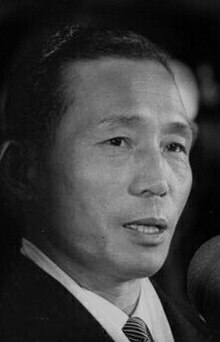
South Korean President Park Chung-hee
The undercover guerrillas would target transportation nodes, TV stations, post offices, police, and military bases in order to cause chaos throughout the country. The conventional North Korean army could then use the guise of an internal uprising against the South Korean regime to legitimize its invasion of South Korea to reunite the peninsula under his rule. However, first Kim had to successfully assassinate Park which would be no easy task.
To do this a thirty-one man assassination team was specially selected from the infamous North Korean 124 Army Unit responsible for most of the infiltration and ambushes launched along the DMZ. These specially selected soldiers trained for two years solely for this operation. Before beginning their mission the team spent their final 15 days conducting mock raids against a full model of the Blue House set up near the North Korean city of Wonsan where their training base was located. Once their superiors were satisfied with their level of proficiency they were immediately sent to execute their mission.
The assassination team was divided into six different teams each commanded by a Captain in order to more easily infiltrate into South Korea. Each team member wore dark overalls, sneakers, a cap, and carried 66 pounds of equipment to include a sub-machine gun, a pistol, grenades, and daggers.
Infiltration
The commando team decided to infiltrate through the 2nd Infantry Division sector near the city of Yeoncheon because it was believed that by infiltrating through the US sector of the DMZ and then successfully assassinating Park Chung-hee that the Korean military would blame the US for the assassination. This in turn would cause tension between the two allies for North Korea’s communist agents to exploit. Each of the North Korean teams were able to successfully breach the DMZ fence and landmines without being detected.
Here is what the only commando to survive the attack had to say about the initial infiltration operation:
At 04:00 on January 18, 1968, 31 commandos crossed the border. (The border fence they cut is preserved to this day). They wore South Korean uniforms and were trained in Seoul accents – “This is the basis of guerrilla fighting!” They removed mines as they went. They halted before a South Korean observation post: Women were going in: “They were not very alert!” Covered in white sheets, the assassins crossed the frozen Imjin River. [Kim Shin-jo]
After successfully crossing the DMZ the six different teams regrouped and began their expected four day march south towards Seoul. For the first two days the commando team was able to successfully march south undetected. Their infiltration mission had gone so well that they even camped out one night just a few kilometers from the major US military installation in the western corridor, Camp Howze.
Fatal Mistake
Initially the commandos had been very luck to not be detected, however their luck would change on the late afternoon of January 19th. On that day the commando team was spotted by four South Korean woodcutters, all brothers working in the mountains. This was a moment where the North Koreans made a terrible mistake.The North Korean commandos had been long taught that the oppressed masses in South Korea were just waiting to be liberated from their puppet government that was backed by the Yankee Imperialists. So instead of killing the woodcutters the commandos decided to conduct an indoctrination sessions with them and teach them the wonders of Juche and the on coming communist conquest that would unit the country and free the oppressed South Korean masses that they figured the woodcutters were part of. It never occurred to them that the South Korean masses were not oppressed and in fact loyal to the ROK government.
To add some context the masses in South Korea were oppressed by the Park Chung-hee regime, but they were no where near as oppressed as the people in North Korea. Remember many of the Koreans during this time frame had lived through the Japanese colonization of the peninsula and knew what oppression was, Park Chung-hee was nothing compared to what they saw before. Additionally Park’s economic policies had brought unprecedented economic growth to South Korea and thus causing the average ROK citizen to be quite happy to put up with some oppression if it meant the continued economic growth of the country. The fact that the commandos were indoctrinated with communist propaganda led to them making a mistake that would ultimately doom their entire operation.
Visitors looking at a crooked pine tree (R) pockmarked with bullet holes that have been ringed with red and white paint, a natural monument to the 1968 raid, at Bukaksan, the small mountain behind the presidential Blue House, in Seoul. Photo courtesy: AFP
After the indoctrination session the woodcutters proudly pronounced themselves converts to the communist ideology which they were then released by the commandos. Once they were released they immediately went and notified the South Korean police of what they had saw. The police notified the South Korean military and a massive counter-guerrilla operation was launched to catch the commandos. However, the South Korean authorities did not know what the mission of the group was and thus could not focus their operations into one area. The commandos were so skilled they were able to easily avoid the perimeter checkpoints by moving in two to three man teams before meeting up again on the outskirts of Seoul.
In Seoul security was much tighter and the commandos took off their civilian overalls which exposed the ROK Army uniforms they wore underneath them. The ROK Army uniforms were perfect replicas and even had the correct unit designation of the 26th ROK Infantry Division sewn on them. They were a mile from the Blue House and decided the best way to penetrate the city’s security would be to do something no one expected, march right through the city straight to the Blue House.
Final Shootout
The North Koreans posed as a South Korean platoon returning from patrol on the city’s outskirts. They marched right through the city right by a number of military checkpoints before arriving 800 meters from the Blue House around 10:30 AM on the morning of January 21, 1968. It is here where the commandos encountered a final police checkpoint that stopped the marching soldiers to question them. The North Koreans fumbled their answers to the questions the commander of the Chongno police station Choe Kyu-sik asked them. Here is how the Chosun Ilbo newspaper described the events that happened next:
But a jeep carrying Jongno Police Station chief Choi Kyu-sik was coming up the road. Choi shouted at the North Korean commandos, “Identify yourselves! What’s inside your coats?” He was taking out a gun to stop them when two city buses came up close and stopped. Mistaking the buses for vehicles that carried police or military reinforcements, the North Korean commandos shot Choi in the chest, tossed hand grenades into the buses, and scattered in every direction. [Chosun Ilbo]
From there chaos broke out as the North Koreans entered into a massive fire fight against the South Korean security forces. A platoon of South Korean infantry had been tasked to reinforce the Blue House’s security and they immediately maneuvered to engage the North Korean infiltrators. It was during this exchange of gun fire that a school bus got caught up in the crossfire killing the women and children aboard. The ROK security forces were only able to get the North Koreans to abandon their mission to kill Park Chung-hee when ROK Army tanks began to rumble down the road towards the North Koreans. With no effective way to fight the tanks, the commandos decided to abandon the mission and fight their way back to North Korea.
Captured North Korean commando Kim Shin-jo
The operation to track down and kill the North Korean infiltrators would end up being even bloodier then the initial fire fight. Both US and ROK military units were mobilized to patrol the South Korean country side to find the infiltrators. More often then not the infiltrators when located would go down in a blaze of gun fire that would claim the lives of even more people. A few of the operatives committed suicide to avoid being captured. The most bizarre death was when one North Korean operatives was captured alive and brought into to be questioned by the Korean National Police Director Chae Won-shik. Unfortunately the police had not bothered to properly disarm the operative who proceeded to pull a pin from a grenade and kill himself and injure the Police Director. Here is how the January 24th, 1968 edition of the Stars & Stripes reported the incident:
Overall, the operation to track down the commandos lasted for nine days where 29 of the infiltrators were killed, one unaccounted for, and only one captured.
The casualties the South Koreans received was steep with 68 South Koreans killed and 66 more wounded. Most of these casualties came during the operation to hunt down the commandos. Of these casualties most were military and policemen, but two dozen of them were South Korean civilians. American forces experienced three soldiers killed and three more wounded in the operation to track down the North Korean operatives. This article from the New York Times suggests that these US soldiers were not killed by the commandos themselves but by other North Korean operatives on the DMZ while the search was going on. The January 25th, 1968 edition of the Stars and Stripes likewise published an article about US soldiers combating infiltrators along the DMZ during the time the Blue House Raid operatives were trying to get back to North Korea:
It was later learned that the one unaccounted for commando had in fact successfully made his way back to North Korea and would later become an Army general. The lone captured commando was a young man by the name of Kim Shin-jo who was on just his second covert mission into South Korea. Much of the details of the Blue House Raid have come from the testimony of Kim Shin-jo. Kim’s statement upon capture was, “I came down to cut Park Chung Hee’s throat!” became a well known footnote of the aborted raid.
Today Kim is far less aggressive and in fact became a Protestant pastor in 1997. Kim received a Presidential pardon for the raid and was released from jail when a forensic investigation determined he never fired a bullet from his weapon. Besides being a pastor Kim is also a hard line anti-Communist:
“What has really changed while the South has been pouring out so much money on the North?” he said. “North Koreans are only becoming hungrier and hungrier while the unilateral support from the South is extending the North Korean government’s life.” Kim said he wants to live “as long as possible” so he can serve as living evidence of North Korea’s spy program against the South. Otherwise, “North Korea will just say they are not responsible for the Jan. 21 incident once I’m gone, like many other incidents North Korea has caused,” he said. [Joong Ang Ilbo]
Interestingly enough there is evidence that Seoul may have captured more than just Kim Shin-jo alive. The below Joong Ang Ilbo article claims that there was in fact 33 commandos sent to kill President Park, but ROK intelligence was able to convert two of them into double agents to spy on North Korea:
North Korea sent two more spies to assassinate South Korean President Park Chung Hee on Jan. 21, 1968, than previously disclosed, a North Korean defector claimed in an interview with the JoongAng Sunday published yesterday.
They were captured alive and sent back to the North as double agents, said the 57-year-old defector, who trained in the 1970s at the same North Korean special military unit as the commandos dispatched to the South. He goes by the alias Hong Eun-taek.
Publicly, the government says 31 North Korean commandos attempted to raid the Blue House in what was one of the boldest North Korean attempts to assassinate a South Korean leader, and all were killed during the raid, except for one, Kim Shin-jo.
“The record left at the unit where I served said that 33 people were sent to the South and two of them escaped [to the North],” Hong said.
Hong served in the eighth battalion of North Korea’s 711 unit in the 1970s, which was the successor of the 124 unit that sent the commandos on the Blue House raid.
He identified the two North Korean commandos who returned to the North as Lim Tae-yong and Wu Myong-hun. Hong said Lim was the chief of the eighth battalion when he was serving there.
He said the two double agents were promoted to two-star or three-star generals after their return to the North.
But they were executed in 1998 when their spying for the South was disclosed.
Hong said there was a widespread rumor in the North Korean military of them being double agents right before their executions.
Hong claimed that another commando was also caught alive, of higher rank than Lim and Wu. The South tried to persuade the three to return to the North as double agents, and they resisted.
The higher ranking commando was beheaded with a farming implement in front of Lim and Wu, and terrified, they signed onto the plan and pledged allegiance to the South, Hong said.
They were returned to the North and told to advance as high as possible in the military, Hong said.
One of the North Korean commandos killed during the raid was indeed found with his head missing. Kim Shin-jo, believed to have been the only survivor, was forced to identify the bodies of his colleagues after the raid.
A Jan. 26, 1968 JoongAng Ilbo article reporting on the incident quoted Kim as saying, “I don’t know [who he is].”
Kim Shin-jo became a South Korean citizen in 1970 and became a Christian pastor in 1997.
The defector who uses the alias Hong Eun-taek defected to the South in 2001. [Joong Ang Ilbo]
Conclusion
The Blue House Raid is quite possibly the most unbelievable provocation between North and South Korea ever since the division of the peninsula. The plan was so bold that it seemed certain to fail, yet these commandos came only 800 yards from completing their mission despite fully alerted authorities looking for them. The Blue House Raid may have been foiled, but the ability of the commandos to so easily infiltrate the DMZ and allude detection demonstrated lacking weaknesses in the security plan and training of both the US and Korean troops.
As bad as these weaknesses were, not all the aftermath of the Blue House Raid was bad. The commandos’ mission was foiled by loyal citizens reporting their movements and one alert policemen who paid with his life for uncovering the commandos. This proved to Park that more then just the military was loyal to his rule, but that South Korean citizens were as well. This incident clearly showed that a true South Korean identity separate from the North Koreans had been formed during Park’s rule in the 1960’s. However, before US and ROK military leaders could even contemplate the negatives and the positives of the Blue House Raid, another crisis would break out two days later; the capture of the USS Pueblo.
This photo, provided by Dewey McLean, a U.S. veteran of the 1950-53 Korean War and currently geology professor emeritus at Virginia Tech and taken during the war, shows an elderly merchant walking a trail on the slope of Mount Nam in Seoul. McLean served as a corporal for a transport unit of the U.S. 8th Army when he was stationed here from 1952-53. (Yonhap)
This photo, provided by Dewey McLean, a U.S. veteran of the 1950-53 Korean War and currently geology professor emeritus at Virginia Tech and taken during the war, shows a Japanese-style shrine (in circle, upper right) on Mount Nam in Seoul and a stairway (lower) to the shrine. McLean served as a corporal for a transport unit of the U.S. 8th Army when he was stationed here from 1952-53. (Yonhap)
This photo, provided by Dewey McLean, a U.S. veteran of the 1950-53 Korean War and currently a geology professor emeritus at Virginia Tech and taken during the war, shows an elderly man walking along a devastated street in Seoul. McLean served as a corporal for a transport unit of the U.S. 8th Army when he was stationed here from 1952-53. (Yonhap)