Moon's budget bill for the NK Human Rights Foundation is set to $0.72m down 92.6%; budget for the organization's database set to $0.43m down nearly 71%; assistance to the defectors has been reduced by more than 31%. This is huge. https://t.co/ofLPR7nLnF
The main objective of this delegation was to figure out a way to continue denuclearization talks between the US and North Korea. Good luck with that:
Chung Eui-yong (3rd from R), a special envoy of South Korean President Moon Jae-in to North Korea, bows before heading for Pyongyang from Seoul’s Seongnam airport on Sept. 5, 2018, along with four other members of a high-profile delegation. They are Vice Unification Minister Chun Hae-sung (2nd from R); Chung; National Intelligence Service Director Suh Hoon (C); Kim Sang-gyun (3rd from L), a senior NIS official; and Yun Kun-young (2nd from L), presidential secretary for state affairs. (Yonhap)
North Korean leader Kim Jong-un met with a special delegation of South Korean President Moon Jae-in Wednesday, possibly reaffirming his commitment to establishing peace on the Korean Peninsula and denuclearizing his country.
“The special delegation met with Chairman Kim Jong-un to deliver the personal letter (from Moon) and exchange their opinions,” Seoul’s presidential office Cheong Wa Dae said in a brief statement.
The statement came hours after Chung Eui-yong, top security adviser to Moon and head of the presidential National Security Council, arrived in the North on what is still expected to be a one-day trip.
“The special delegation is scheduled to leave (Pyongyang) after attending a dinner,” Cheong Wa Dae spokesman Kim Eui-kyeom said, adding it was not clear who would host the dinner.
The Cheong Wa Dae spokesman said the outcome of the delegation’s trip to Pyongyang will be released Thursday, considering their late return. [Yonhap]
Based on Japan’s recent military budget proposal I think we can infer that they expect the current peace initiative between North Korea, South Korea, and the United States will not last:
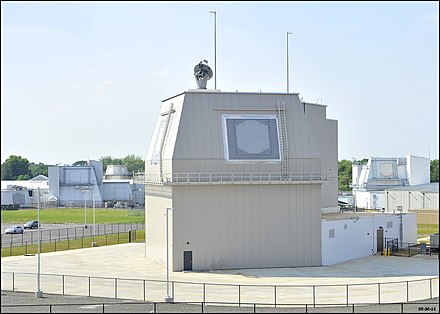
Aegis Ashore Deckhouse
Japan’s Defense Ministry is seeking to more than double spending on missile defense, including purchases of costly American arsenals, to defend against North Korean threats.
The record-high 5.3 trillion yen ($47 billion) request for fiscal 2019, approved Friday by the ministry, is up 2.1 percent from last year. The military spending has risen seven consecutive years under Prime Minister Shinzo Abe.
The request related to missile defense rises to 424 billion yen ($3.8 billion) from about 180 billion yen last year. The overall government budget plan is to be submitted for Cabinet and parliamentary approval later this year.
The final budget could still grow because the request leaves out spending to reduce Okinawan communities’ burden of hosting many of 50,000 American troops stationed on the southern island and a relocation cost for some troops to the U.S. Pacific territory of Guam.
A big chunk would buy a pair of land-based Aegis missile defense systems and a ship-to-air SM-3 Block IIA interceptor with an expanded range and accuracy developed jointly by the U.S. and Japan, as well as upgrading of fighter jets and destroyers to make them compatible with advanced interceptors. [Stars & Stripes]
Sankei reports China conducted its own "decapitation exercise" targeting KJU's vacation homes, key nuke facilities and NK command centers. The training was conducted in April near NK border, after the 1st KJU visit but before the inter-Korean summit (4.27) https://t.co/5qV419tYHF
Via a reader tip comes news that a South Korean think tank is recommending one of the worst Inter-Korean ideas yet, a single currency between North and South Korea:
South and North Korea should use a single currency to form an economic union in the mid to long term, the Korea Institute of Finance (KIF)noted in a report Sunday.
“When investment increases in North Korea along with inter-Korean trade of goods and services, the flow of capital will naturally follow. It will lead to problems such as settlements and which currencies should be used,” said Lee Yoon-sok, a senior research fellow at the KIF.
To deal with such problems, the two governments may allow residents to exchange their money with other currency when traveling North or South.
They may also allow the currencies of the two countries to be freely used in both countries. The researcher added that some North Koreans are known to be holding South Korean currency, expecting economic integration. [Korea Herald]
You can read more at the link, but if we thought North Korean counterfeiting was bad now, just wait until there is a single currency the Kim regime can control and print at will and call it inflation. I wonder who’s face would go on the bills?
Also of interest is that the KIF believes that sanctions will be eased on North Korea before the mid-term elections by President Trump to give him a foreign policy win. As long as North Korea does not commit to real denuclearization I don’t see sanctions being dropped, but I guess we will see what happens.
Notice that the ROK ambassador said nothing about North Korea wanting to maintain momentum to denuclearize. The Kim regime is of course willing to talk in hopes of gaining concessions for little to nothing in return:
South Korean Ambassador to the U.S. Cho Yoon-je (Yonhap)
North Korea remains determined to maintain the momentum of dialogue with the United States despite a recent hiccup, South Korea’s top envoy in Washington said Thursday.
Ambassador Cho Yoon-je dismissed a view that Pyongyang and Washington are shifting back to a confrontation after months of diplomatic engagement.
“North Korea’s intention of maintaining dialogue momentum is certain,” he told South Korea’s Washington, D.C. correspondents.
He was referring to “various speculations” driven by media after President Donald Trump called off Secretary of State Mike Pompeo’s trip to Pyongyang this week. [Yonhap]
Below are excerpts from some more great analysis by Professor B.R. Myers about the state of Inter-Korean affairs and the United States. This first excerpt shows how President Moon really feels about the US-ROK alliance:
B.R. Myers
This is in line with the remarkable discretion Moon Jae-in has sustained since the start of his election campaign. Never does he speak more guardedly than when around foreigners critical of the North. Shortly after he took office I asked two Americans who had talked with him on separate occasions what impression they had got: “well-rehearsed,” said one, “well-drilled” the other. Had he given vent to the sort of anti-American, pro-North remarks Roh Moo Hyun went in for (though Roh was conservative in comparison), his policies would have encountered more resistance.
His base knows how he really feels. During the presidential election campaign in 2012 the novelist Kong Chi-yŏng, a prominent supporter, tweeted cheerfully that the Yankee-go-home candidate Lee Jung-Hee sounded “like Moon’s inner voice.” The conservatives pounced, and she had to do a quick Prufrock: It wasn’t what she’d meant at all. Since then the Moon camp has shown remarkable discipline. Professor Moon Chung-in is an exception of sorts, since it’s his job to send up trial balloons. [B.R. Myers]
I have long believed that President Moon is just a better polished, smarter, and more disciplined version of former President Roh Moo-hyun. Remember Moon was Roh’s Chief of Staff during his presidency, so learned well from all of Roh’s mistakes. This discipline and political smarts he learned has allowed Moon to sell himself as a centrist when he is in fact a leftist.
This next excerpt shows how the Moon administration plans to implement their confederation plans with North Korea:
To assume that the two Korean administrations do not already see each other as confederates, and behave accordingly, albeit discreetly, is like assuming that a man and woman planning a marriage are not yet having sex. When we ask for Moon’s help in getting the other half of the peninsula to denuclearize, we are in effect asking this fervent nationalist to help remove the future guarantor of a unified Korea’s security and autonomy. Why should he comply? The only remaining point of the US-ROK alliance is to ease the transition to a confederation — which would obviate that alliance altogether.
The recent news of South Korean violations of sanctions (and of a presidential award just given to the main importer of North Korean coal) is merely illustrative. It’s trivial in comparison to the basic truth staring us in the face: No true liberal-democratic ally of the United States would think of leaguing up with an anti-American dictatorship, let alone one still in the thrall of a personality cult. I’m not sure whether the Trump administration is unaware of this or merely pretending to be.
At any rate a peculiar pattern has repeated itself every few weeks or so since Moon took office. It goes like this. First the Blue House is caught in some statement or act of disloyalty to the spirit of the alliance — like appointing an unrepentant former enforcer of North Korean copyrights to the second most powerful post in the government. (I don’t mean the prime minister.) South Korean conservatives then shout in chorus, “The Americans won’t stand for this!” Whereupon the White House rushes to say, in effect, “Oh yes we will!” It seems to revel in making pro-American, security-minded South Koreans look foolish. (…….)
It’s therefore easy to imagine Trump or Pompeo expressing support for whatever “peace system” Moon and Kim happen to agree on, so long as progress toward denuclearization is made first. Any significant step in that direction — which we can expect the upcoming Pyongyang summit to announce with great fanfare — would then compel the US to sign off on confederation, thus encouraging the South Korean public to do likewise. Before we know it, the ROK could be locked in an embrace it might eventually need American help to get out of. [B.R. Myers]
As always I highly recommend reading the whole article from Professor Myers at the link, but at some point you would think the Trump administration would start pushing back on President Moon’s pro-North Korean agenda. Possibly the suspension of Inter-Korean railway inspections by the United Nations Command is the start of a push back?
President Moon appears to be doubling down on his policies:
President Moon Jae-in (L) walks into a Cheong Wa Dae meeting room, along with Prime Minister Lee Nak-yon (R) and Rep. Lee Hae-chan, head of the ruling Democratic Party of Korea, on Sept. 1, 2018. (Yonhap)
President Moon Jae-in called Saturday for an unswerving reform drive despite a falling approval rating and controversies over his economic policy.
He was speaking at an unprecedented gathering of all ruling party lawmakers, Cabinet members and presidential officials.
It came two days after Moon’s first Cabinet shake-up to replace five ministers, including the defense chief and the top education policymaker.
Late last month, the Democratic Party of Korea picked Rep. Lee Hae-chan, a seven-term lawmaker, as its new leader.
“The task of the times that we have to achieve together is clear,” Moon said at the meeting held at his office Cheong Wa Dae.
It’s to create a fair and just country through strong and constant reform measures, widely dubbed the “liquidation of past malpractices.” [Yonhap]
I wonder which malpractices is he referring to? Is the founding of the Republic of Korea one of the malpractices? It may be considering how President Moon has denied that the ROK was not founded in 1948.
He pointed out that South Korea is at a time of a “grand shift.”
He stressed the need for addressing the gap between the haves and have-nots via an appropriate distribution policy and promoting the co-prosperity between South and North Korea on the basis of denuclearization and a peace regime.
What is an appropriate distribution policy? The only distribution I have been hearing about is the ROK money expected to be redistributed to Kim Jong-un. Also notice the term “peace regime” being used by Moon. That is the preferred term now by ROK leftists to disguise their real intention of forming a confederation with North Korea.
To that end, the president said, Cheong Wa Dae, the ruling party and the government should make concerted efforts.
Moon, in particular, cited negative side effects from South Korea’s growth-oriented approach in the past, such as widening income disparity and misconducts by some vested powers.
Inter-Korean relations were once broken and the cloud of war was cast over Korea, he said. [Yonhap]
President Moon does not like South Korea’s growth oriented economy that has brought remarkable affluence to South Korea in an incredibly short time? Also by vested powers is President Moon referring to the United States?
This seems like something that should not be lifted until North Korea fully agrees to denuclearize and act like a responsible member of the world community:
A staff member stands at the reception desk of a hotel, backdropped by a world map, in Pyongyang, North Korea, Oct. 23, 2014. The U.S. Thursday extended until Aug. 31, 2019, a ban for its citizens to travel to North Korea.
The U.S. on Thursday extended the ban on Americans’ travel to North Korea for another year, saying it was too dangerous to go there.
“The safety and security of U.S. citizens overseas is one of our highest priorities,” a State Department official said. “The travel warning for North Korea remains in place — the Department of State strongly warns U.S. citizens not to travel to North Korea.”
The travel ban extension, in force until August 31 next year, comes as Washington’s efforts to negotiate the denuclearization of the Korean peninsula with Pyongyang have stalled [VOA]