This is a wise move because Japan doesn’t need to give South Korean leftists any more reason to bash the country with:
A Japanese protester holds the rising sun flag and Japanese flag during a rally against South Korea in Tokyo on Feb. 22, 2013. KOJI SASAHARA/AP
Japan announced Friday that it won’t send a warship to an international fleet review hosted by South Korea next week because it could not accept Seoul’s request that it remove the Japanese navy’s “rising sun” flag.
Defense Minister Takeshi Iwaya told reporters that Japan had notified the South Korean government of its decision.
“Unfortunately, we have come to a situation where we have no choice but to pass on our participation in the international fleet review,” Iwaya said.
Many South Koreans see the flag as a symbol of Japan’s World War II aggression, and protested its use during the Oct. 10-14 event near Jeju island. [Stars & Stripes]
You can read more at the link, but this dust up makes me wonder that if North Korea gets its confederation with South Korea, will the Stars & Stripes one day be unwelcome in Korea? From the Kim regime perspective it would be a symbol of aggression just like the Rising Sun flag.
Well, we must never forget 36 yrs of Japan's aggression which ended more than 70 years ago but must forget close to 70 yrs of Kim family's ongoing aggression against its people and South Korea. https://t.co/yTcUbDZRR3
I am sure the irony is not lost on the Kim regime that they are bashing the Japanese Navy for an arms build up when it simply tested an SM-3 missile used for missile defense of their country. An SM-3 missile is not used for offensive operations against North Korea:
North Korea on Saturday blasted Japan for trying to create tension on the Korean Peninsula, while also accusing the country of trying to rebuild its military.
“The maritime ‘Self-Defense Force’ (MSDF) of Japan recently conducted a test-fire of the interceptor missile SM-3 Block 1B on an Aegis destroyer in waters off Hawaii of the U.S. It is reportedly the first time that the MSDF conducted an interceptor missile test-fire,” the Rodong Sinmun, a newspaper published by the North’s Workers’ Party, reported.
In a commentary carried by the North’s Korean Central News Agency, the newspaper insisted Japan was trying to build a military capable of waging war against others.
“The present reactionary regime of Japan seeks to put the Asia-Pacific region under control by turning Japan into a country capable of going to war,” it said. [Yonhap]
Courtesy of the Japanese Navy, the Moon administration has a nice distraction to rally all Koreans around:
The Navy said Sunday it remains in opposition to a Japanese warship carrying a controversial imperialistic flag to an international naval event in South Korea next month.
The southern island of Jeju will stage the International Fleet Review from Oct. 10-14, and the Navy said warships from 15 nations, including Japan, the United States and China, will participate in the first such event in South Korea since 2008.
The Japanese vessel is expected to display the Rising Sun Flag, viewed as an emblem of the country’s wartime aggression in South Korea, where historical animosity over the wrongdoings of the country’s former colonizer still runs deep. Japan colonized the peninsula from 1910-45.
South Korea earlier informed participating nations that they should raise their national flag and the flag of the host country. One South Korean Navy official said the stance hasn’t changed.
“We’ll continue to speak with Japan regarding this matter,” the official said. “Our Navy has a separate communication channel with the Japan Maritime Self-Defense Force, and we’ll continue to let them know where we stand.”
Another South Korean military source said he expected Japan to carry the flag into Jeju waters and then take it down during the actual review. [Yonhap]
This is pretty significant that a foreign country is willing to defend US soil with one of their missile defense systems:
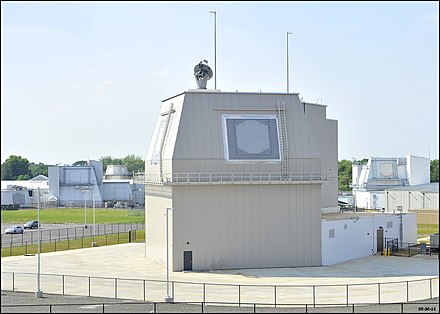
Cmdr. Axel Steiner of Aegis Ashore Missile Defense System Romania gives a tour to members from the Japanese Diet, July 31, 2018.
Japan will legally be able to use planned Aegis Ashore systems to intercept North Korean missiles launched toward Guam, a top government official said this week.
A pacifist constitution bans Japan from stepping in to defend other nations unless it was also being attacked; however, security legislation passed in 2015 allows the country to exercise its right to collective defense and to defend close allies when attacked — under certain conditions. [Stars and Stripes]
You can read more at the link, but also keep in mind that Japan is home to two AN/TPY-2 radar sites operated by US soldiers that are also used to detect ballistic missiles launch from North Korea as part of the US homeland defense architecture. Clearly Japan is a great ally in regards to protecting US citizens from ballistic missile attack.
This thread reminds me of a speech by a high ranking Central Party official in which he spoke of the need for study-abroad students to avoid foreign women, in particular Japanese who will target us for improvement of their genetic stock. https://t.co/zI4rjVcy8E
Based on Japan’s recent military budget proposal I think we can infer that they expect the current peace initiative between North Korea, South Korea, and the United States will not last:
Aegis Ashore Deckhouse
Japan’s Defense Ministry is seeking to more than double spending on missile defense, including purchases of costly American arsenals, to defend against North Korean threats.
The record-high 5.3 trillion yen ($47 billion) request for fiscal 2019, approved Friday by the ministry, is up 2.1 percent from last year. The military spending has risen seven consecutive years under Prime Minister Shinzo Abe.
The request related to missile defense rises to 424 billion yen ($3.8 billion) from about 180 billion yen last year. The overall government budget plan is to be submitted for Cabinet and parliamentary approval later this year.
The final budget could still grow because the request leaves out spending to reduce Okinawan communities’ burden of hosting many of 50,000 American troops stationed on the southern island and a relocation cost for some troops to the U.S. Pacific territory of Guam.
A big chunk would buy a pair of land-based Aegis missile defense systems and a ship-to-air SM-3 Block IIA interceptor with an expanded range and accuracy developed jointly by the U.S. and Japan, as well as upgrading of fighter jets and destroyers to make them compatible with advanced interceptors. [Stars & Stripes]
I am sure it was sweet to beat Japan in the Asian Cup Finals, but the fact they don’t have to do their mandatory military service is probably the most satisfying part of this win for the players:
South Korea defeated Japan 2-1 to defend the men’s football title at the Asian Games in Indonesia.
In the final match at Pakansari Stadium in Cibinong on Saturday, the men’s football team finished the 90-minute main game in a scoreless draw.
During extra time, Lee Seung-woo scored the first goal and Hwang Hee-chan added another minutes later.
South Korea successfully defended its Asiad title following their victory at Incheon 2014 and came to hold the most Asiad titles in men’s football with five.
The victory also gave the 20 Taegeuk Warriors, including captain Son Heung-min, exemption from mandatory military service that usually takes about two years. [KBS World Radio]
Royal Australian Air Force to conduct joint training exercise with Japan Air Self-Defense Force in Japan for the first time, coming September 10-30. https://t.co/kcBTYWKl90
This image provided by Seo Kyoung-duk, professor of Sungshin Women’s University, on Aug. 14, 2018, promotes a video clip on YouTube (https://youtu.be/5isUH0g_YEU) that he made to criticize Japan for its attempts to distort the history of its wartime sexual slavery. South Korea has designated Aug. 14 as national day for the former sex slaves, also known as comfort women. (Yonhap)