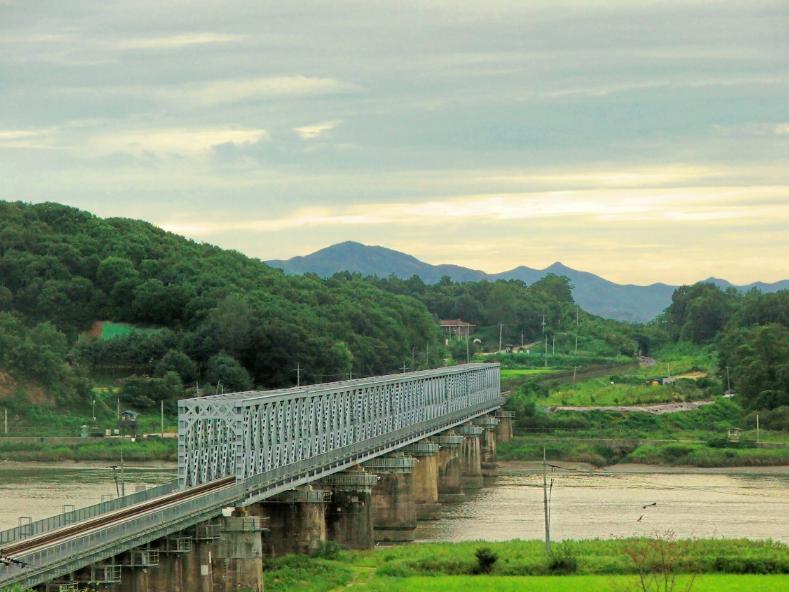
The Incheon Landing, code named “Operation Chromite” is quite possibly the most recognized action taken during the Korean War and what is most amazing about the operation is the fact that it happened at all. Just about every general in the Pentagon was against General MacArthur’s plan to invade Incheon because of the great danger involved in navigating Incheon’s infamous tidal flats. Everyone else was convinced that Kunsan or even Osan south of Incheon were better locations to launch an amphibious operation of this magnitude. MacArthur knew that this is where the North Koreans would expect the UN forces to land and the North Korean were in fact making preparations for landings in these areas because they believed no one was foolish enough to try and land at Incheon. Well no one accept General MacArthur.
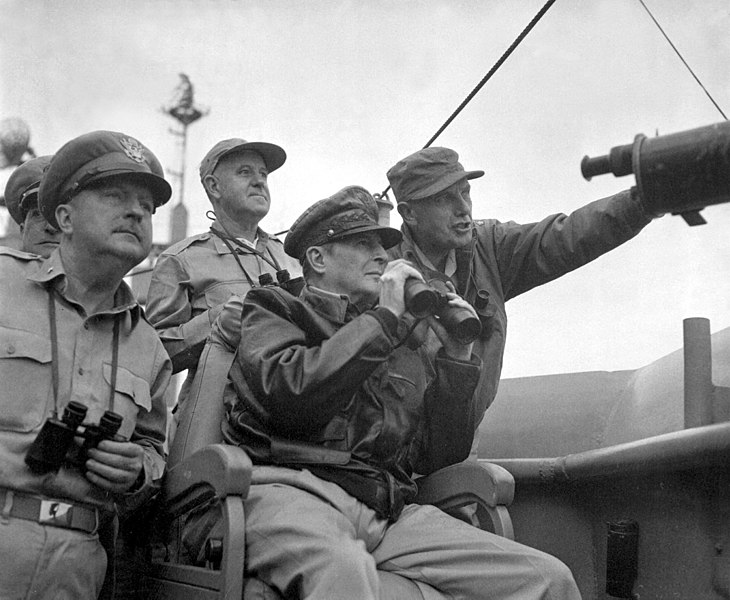
MacArthur convinced the Secretary of Defense that his plan was the right course of action and eventually using has famous flare and prestige MacArthur was able to convince the Joint Chief’s of Staff and President Harry Truman to sign off on his plan. However, visions of landing crafts trapped in the Incheon mud which would be sitting ducks for the North Korean artillery raced through everyones minds.
Fortunately the successful “Operation Trudy Jackson” put those fears to rest. The operation allowed General MacArthur’s armada of ships containing the newly constituted X Corps and associated combat power to safely navigate the treacherous Incheon Bay the night of September 14, 1950. The bright light of the Palmi-do lighthouse proved to be a critical navigational aid for the sailors involved with the landing.
Lt. Eugene Clark’s successful intelligence gathering also allowed General MacArthur to gain much needed knowledge about the enemy’s strong points and weaknesses. However, General MacArthur had one weakness himself. The X Corps that would carry out the operation was highly inexperienced. The X Corps commanded by MacArthur’s close friend and advisor Major General Edmond Almond was created specifically for the invasion of Incheon and featured many troops with no combat experience.
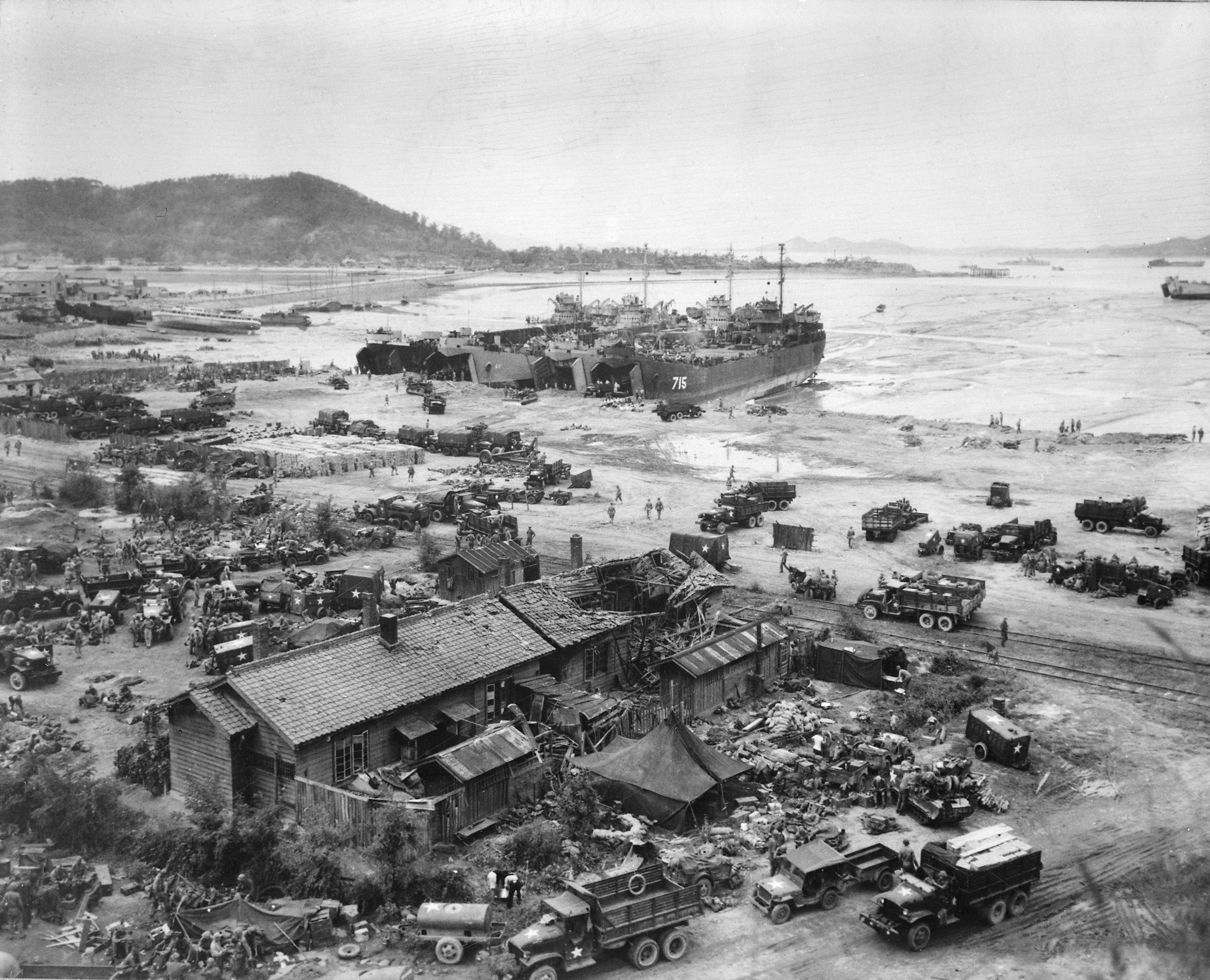
Two of the three Marine regiments that composed the 1st Marine Division involved in the operation had no combat experience. In fact the 1st Marine Regiment of the 1st Marine Division was activated in August and staged in Japan preparing for the invasion and the 7th Marine Regiment was activated on the 1st of September before deploying to fight at Incheon. Both of these regiments were filled with replacements from state side school houses, half of them were from the US Marine Reserve, and Marines transferred from the Mediterranean. The 5th Marine Regiment of the 1st Marine Division on the other hand were battle hardened Marines who fought in ferocious battles along the Naktong River Line during the Pusan Perimeter defense. They were the only unit in the X Corps with combat experience.
The 7th Infantry Division which was the Army’s contribution to the invasion was in worse shape than the Marines. They were the division responsible for occupation duty in Japan. However, as the war raged on in Korea the division was stripped for replacement soldiers in Korea. In August of 1950 the 7th Division was at approximately half strength. By channeling all infantry and artillery replacements into the 7th Division and transferring 8,000 ROK Army KATUSA trainees from Pusan to join the 7th Division in Japan, the division was able to near 100% strength by September.
However, these 8,000 KATUSA soldiers were merely nothing more than poor Korean boys taken from the refugee camps of Pusan for KATUSA training before being picked up for the Incheon invasion. They had not received any English or military training before leaving for Japan. Many of the KATUSAs in fact wore only shorts and sandals when they reported to their respective units in Japan.
To say the US invasion force lacked experience was an understatement but they did have numbers because X Corps when it was all said and done was composed of over 70,000 soldiers. MacArthur however, would rely heavily on the battle hardened 5th Marine Regiment to spearhead the landing at Incheon.

For two days prior to the landing the North Korean positions had been bombed repeatedly by US naval and air power. At 6:30AM on September 15, 1950 Marines from the battle hardened 5th Marine Regiment with nine Pershing tanks landed on Green Beach on Wolmi-do Island. The island sat in the middle of the harbor and had to be secured before the remaining invasion force could land at Incheon proper. The Marines secured the island in one and a half hours and killed or captured 400 North Korean soldiers while only suffering 17 wounded themselves.
However, the tide receded by 8:30AM and the invasion fleet had to retreat or risk being stuck in the mud flats. The Marines on Wolmi-do had to hold the island from an enemy counter attack along the tidal barrier connecting the island to the mainland until the tide rose again and more troops could land. The Marines held the island until 5:32PM when the tide rose again and the remaining Marines from the 1st Marine Division stormed Red Beach to the North and Blue Beach to the south of Wolmi-do, crushing the enemy resistance in the city of Incheon.
A picture of a Marine climbing a 15 foot high tidal barriers with a ladder while being shot at by North Koreans hiding in buildings over looking his position became the iconic image of the landing .
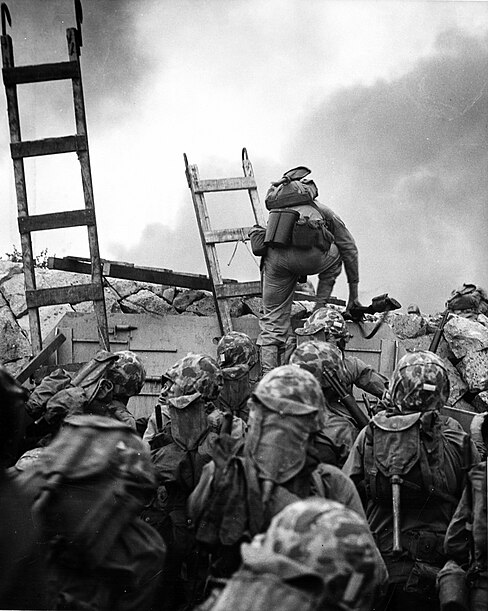
There had been no such amphibous landing during World War II into a city like what was being attempted now. Also during this time of combat in the streets of Incheon the Pershing tanks and Marines on Wolmi-do began to cross the tidal barrier to enter Incheon and also engage the overwhelmed North Koreans.
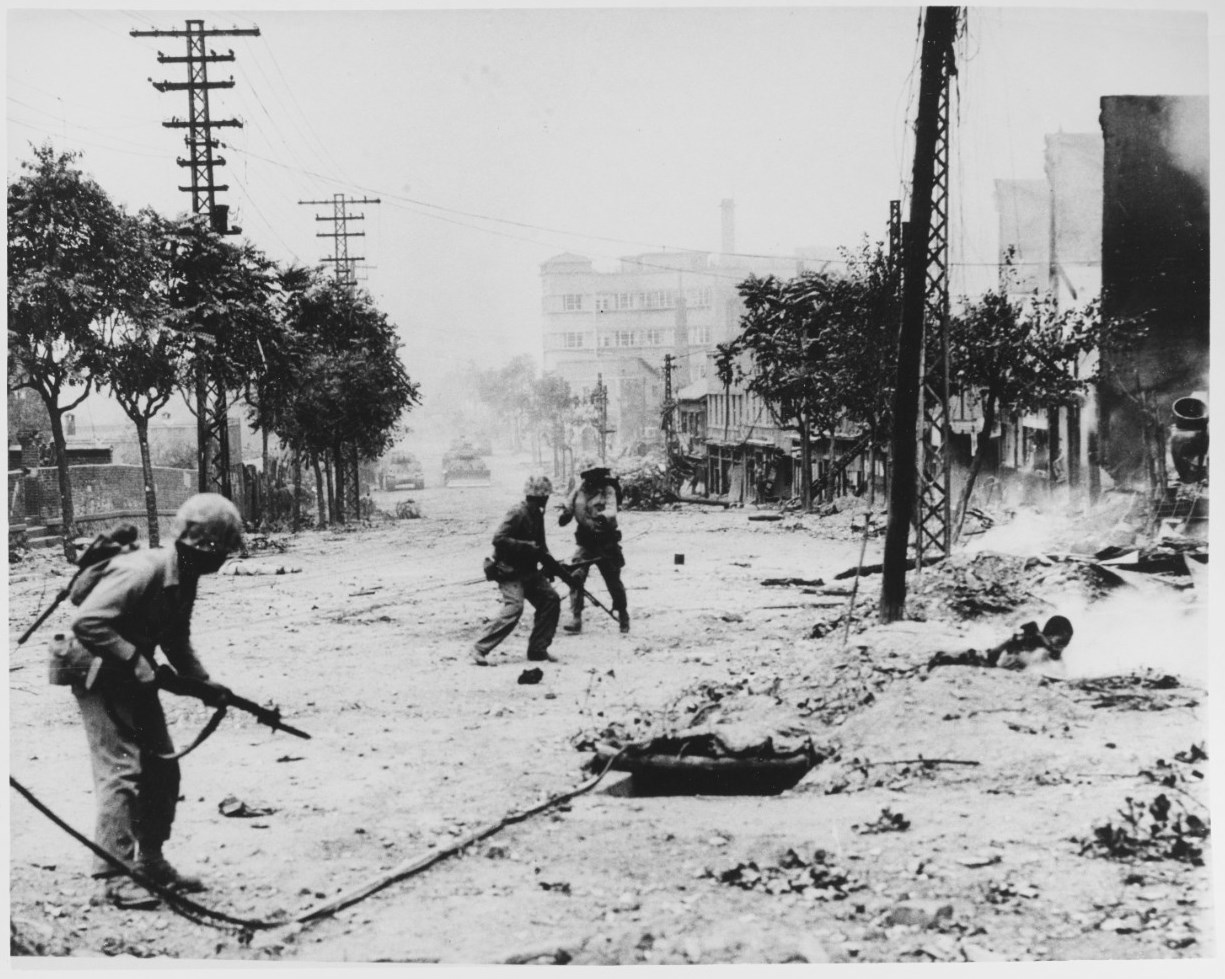
By 0130 on 16 September, 1950 the Marines had secured all their objectives in Incheon and allowed the ROK Special Marines to enter the city and mop up any remaining enemy forces, which they did with great brutality. Overall the X Corps had only 20 men killed, 174 wounded, and one MIA in taking Incheon. It was truly a brilliant amphibious operation constructed by General MacArthur.
The harbor was secured and the remainder of the X Corps, mostly the 7th Division, unloaded their equipment and men and began the march to capture Seoul. By September 26, 1950 Seoul was in UN forces hands and the North Korean supply lines had been effectively cut to their forces in the south. The 8th Army units at the Pusan perimeter mounted an offensive against the North Koreans and quickly the North Korean units were crushed by MacArthur’s hammer and anvil tactic. The North Koreans would never recover from this major defeat until the Chinese entered the war. But that is a story for another posting.
Information about the Incheon Landing was provided by the Kmike.com website and the book, This Kind of War by T.R. Fehrenbach.