It looks like Japan is the one democratic nation that the North Koreans are looking to play nice with:
The influential sister of North Korean leader Kim Jong Un offered a rare opening for Japan, saying she saw a positive tone in comments from Prime Minister Fumio Kishida, who is seeking a summit. Kim Yo Jong indicated a meeting of leaders would be possible if Japan “does not lay such a stumbling block as the already settled abduction issue,” she said in a press statement issued Thursday on state media.
“It is my opinion that if Japan makes a political decision to open up a new way of mending the relations through its courteous behavior and trustworthy action on the basis of courageously breaking with anachronistic hostility and unattainable desire and recognizing each other, the two countries can open up a new future together,” the statement carried on the Korean Central News Agency said.
The tone is a marked change from comments she issued nearly two years ago when she lumped Japan in with a bunch of “sinister” nations she accused of raising rabble at the United Nations to criticize Pyongyang for the test of an intercontinental ballistic missile.
You can read more at the link, but what I suspect is that the Kim regime sees the growing relationship between Japan and South Korea. Because of this they probably want to play nice with Japan in order to try and separate them from South Korea.
ITTF World Table Tennis Championships kicks off in Busan
The opening ceremony for the International Table Tennis Federation World Team Table Tennis Championships takes place at the Busan Exhibition and Convention Center in the southeastern port city of Busan, on Feb. 17, 2024, as provided by the organizing body. (Yonhap)
This whole story sounds like something out of the Onion:
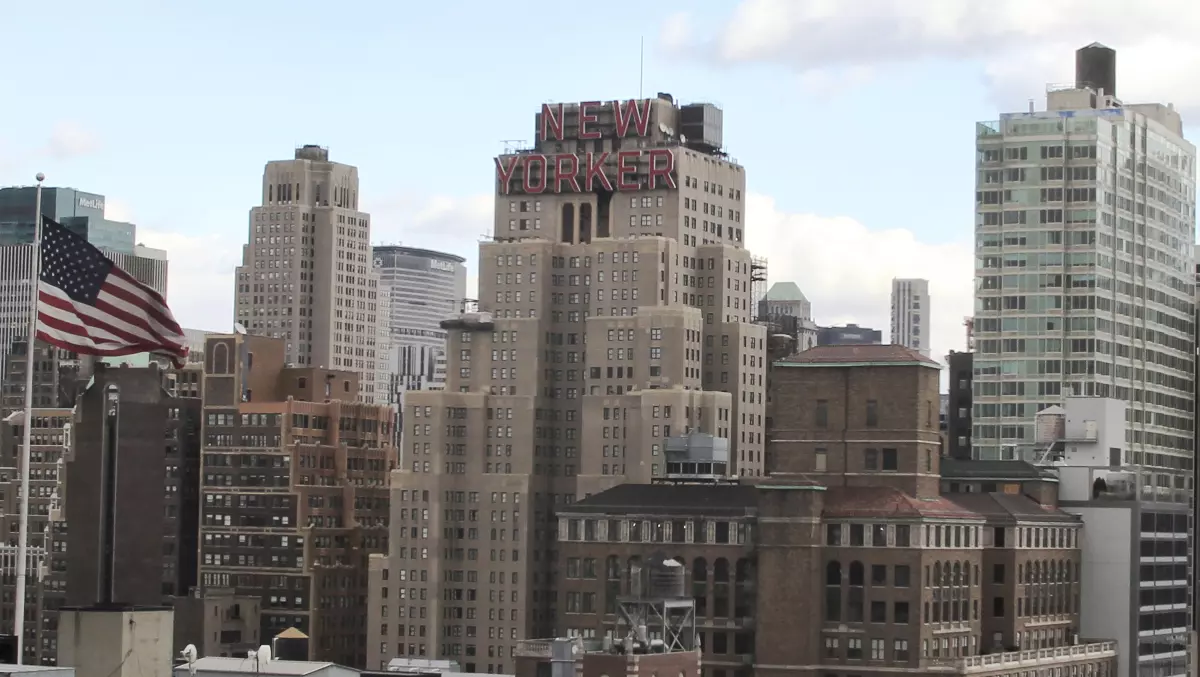
For five years, a man managed to live rent-free in a landmark New York City hotel by exploiting an obscure local housing law.
But prosecutors say Mickey Barreto went too far when he filed paperwork claiming ownership of the New Yorker Hotel building in midtown Manhattan — and tried to charge another tenant rent.
This month, he was arrested and charged with filing false property records. But Barreto, 48, says he was surprised when police showed up at his boyfriend’s apartment with guns and bulletproof shields. As far as he is concerned, it should be a civil case, not a criminal one.
“I said, ‘Oh, I thought you were doing something for Valentine’s Day to spice up the relationship until I saw the female officers,’” Barreto recalled telling his boyfriend.
This guy was getting free rent at a $200 a day hotel through a legal loophole for five years and still got greedy and tried to claim ownership of the entire hotel:
Manhattan prosecutors acknowledge that the housing court gave Barreto “possession” of his room. But they say he didn’t stop there: In 2019, he uploaded a fake deed to a city website, purporting to transfer ownership of the entire building to himself from the Holy Spirit Assn. for the Unification of World Christianity, which bought the property in 1976. The church was founded in South Korea by a self-proclaimed messiah, the late Rev. Sun Myung Moon.
Barreto then tried to charge various entities as the owner of the building, “including demanding rent from one of the hotel’s tenants, registering the hotel under his name with the New York City Department of Environmental Protection for water and sewage payments, and demanding the hotel’s bank transfer its accounts to him,” the prosecutor’s office said in a statement.
“As alleged, Mickey Barreto repeatedly and fraudulently claimed ownership of one of the city’s most iconic landmarks, the New Yorker Hotel,” said Manhattan Dist. Atty. Alvin Bragg.
You can read more at the link, but essentially a gay guy uses incompentent New York government to live rent free in a landmark New York hotel for five years and then tries to steal hotel from a notorious religious cult.
This is pretty ridiculous that these doctor trainees are vowing to go on strike because of the government’s increase in medical students in order to address a shortage of doctors:
Prime Minister Han Duck-soo (R) speaks at an emergency meeting with ministers at the government complex in central Seoul on Feb. 19, 2024. (Yonhap)
Trainee doctors began submitting their letters of collective resignation Monday in protest against the government’s plan to boost the number of medical students, while the health ministry ordered all of them to keep providing medical treatment.
Worries mounted as doctors warn of a large-scale strike and other responses in opposition to the government’s decision to add 2,000 to the country’s medical school enrollment quota next year, marking a sharp rise from the current 3,058 seats.
Although the government had initially played down the possibility of doctors’ collective action, it is feared the nation will suffer substantial disruptions to its medical service, with some patients already experiencing delays in surgeries and other treatments in hospitals.
You can read more at the link, but the ROK government is ordering the trainees to continue to provide medical services. If they do walkout it will be interesting to see if the government revokes their medical licenses thus ending their careers in medicine.
Sinking freighter This photo, provided by the Korea Coast Guard, shows the 1,959-ton cargo ship Kum Yang No. 6 sinking in the sea 61 kilometers southwest of Jeju Island at around 9:55 p.m. on Feb. 15, 2024. All 11 crew members of the ship were rescued. (Yonhap)
If North Korea quit making threats and provocations there wouldn’t be a need to conduct aerial surveillance of their country:
North Korea on Saturday accused South Korea and the United States of heightening tensions on the Korean Peninsula with aerial reconnaissance activities.
In a commentary carried by the Korean Central News Agency, the North said that Seoul and Washington have been stepping up their “spying activities” this month, calling such a move a “stern provocation” against the country.
The North claimed the countries attempted to secure information on the North’s inner regions by conducting surveillance activities with the U.S. RC-135 Combat Sent and RC-135W Rivet Joint and South Korea’s advanced high-altitude unmanned aircraft Global Hawk and E-737 Peace Eye early warning aircraft.
The North said it is closely monitoring such military activities and threatened that it is ready to destroy its enemies anytime.