I guess just the fact that all three foreign ministers are meeting is progress, but I don’t expect anything to become of it:
Ships assigned to Japan Maritime Self-Defense Force, Indian navy, and U.S. Navy steam alongside Ticonderoga-class guided-missile destroyer USS Shiloh in the East China Sea on July 27, 2014. Abby Rader/U.S. Navy
For the first time in nearly three years, the foreign ministers of China, South Korea and Japan will meet Saturday for trilateral talks that could pave the way for a new era of cooperation – or prolong festering animosities rooted in the World War II era.
South Korean Foreign Minister Yun Byung-se will host his Chinese and Japanese counterparts, Wang Yi and Fumio Kishida, in Seoul for the discussions, which were last held in 2012.
The meeting is seen as a possible prelude to a three-way summit between leaders of the countries later this year. Chinese President Xi Jinping and Japanese Prime Minister Shinzo Abe met briefly on the sidelines of the APEC world leaders’ gathering in Beijing in November, but have never had a bilateral summit since they both came to power in 2012. Nor has Abe had a summit with South Korean President Park Geun-hye. Park and Xi, however, have met repeatedly, and warmly.
The 70th anniversary of the war’s end will be marked this summer in Asia with a variety of high-profile events, including a military parade in Beijing. Seven decades since Tokyo’s surrender, Japan, South Korea and China have strong economic ties, but deep strains remain, inhibiting collaboration on a range of matters including maritime issues and North Korea.
Frostiness between South Korea and Japan – both U.S. allies – and closer relations between South Korea and China have complicated Washington’s diplomacy in the region amid China’s continuing rise. [LA TImes]
Here is why it is not in the interest of China or South Korea to resolve these issues with Japan:
At the same time, leaders in China and South Korea often see an advantage to stirring up nationalist, anti-Japan sentiments at home as a way of shoring up political support. Blatant anti-Japanese propaganda appears regularly in state-run media in China, for instance. And conflicting claims to uninhabited islands have also marred relations between Tokyo, Beijing and Seoul.
Whether the three nations now have the will to break their cycle of recriminations and defensiveness remains to be seen. World leaders from German Chancellor Angela Merkel to U.N. Secretary General Ban Ki-moon have been urging all three countries in recent weeks to forge a new path.
To be fair members of the Japanese government also use the historical issues to push their own domestic agendas as well. Just visit the Yushukan Museum next to the Yasukuni Shrine in Tokyo and see the absurd historical revisionism going on there that many on the Japanese far political right support. If the Japanese government was serious about resolving these historical issues this is what I recommend they should do.
Collin Patrick McCloy, great-great grandson of Gen. James A. Van Fleet who served as commander of the 8th U.S. Army during the Korean War, poses with the statue of the late general at the Korea Military Academy in Seoul on March 20, 2015. McCloy is a first-year cadet at the U.S. Military Academy, known as West Point. (Yonhap)
I’m not sure what this teacher’s group is complaining about? Do they want bribery and corruption in the teaching profession?:
The country’s largest right-leaning education organization on Thursday denounced an order issued this week by the Seoul education authority that strictly prohibits teachers from accepting bribes from parents, otherwise known here as chonji.
On Sunday, the Seoul Metropolitan Office of Education issued a press release announcing that bribery would not be tolerated in any form and that any person who reported a teacher accepting gifts or cash would be given a reward ten times the amount of the kickback, up to 100 billion won ($89.4 million).
The Korea Federation of Teachers’ Associations (KFTA) subsequently requested that Seoul Superintendent Cho Hee-yeon apologize for publicly regarding all educators as “potential perpetrators,” arguing that teachers already attempt to foster a morally sound atmosphere.
“Given that teachers are required to have a relatively higher level of morality, we’ve been making efforts to create a more transparent culture by establishing an ethics charter in 2005,” KFTA Chairman Ahn Yang-ok said at a rally Thursday morning in front of the capital city’s education office. “The overall majority of teachers are not accepting chonji at all.”
“But the Seoul Metropolitan Office of Education has issued provocative press releases saying they would discipline even those who accept 10,000 won and have disgraced all teachers,” he continued. “Cho must apologize and come up with countermeasures.”
The Seoul’s education office explained that when it announced the new regulation, it merely intended to reassure parents so that they wouldn’t agonize over bringing in a gift for their child’s teachers.
The new regulation also demands that schools not disclose the home addresses of its teachers and send text messages to parents explaining that bribery will not be allowed. Educators are only allowed to accept gifts that do not exceed 30,000 won and only at public events like Teachers’ Day or graduation ceremonies. [Joong Ang Ilbo]
I guess we will see if anything significant comes out these talks next week:
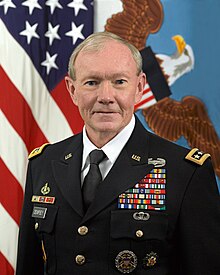
The top U.S. military officer will visit South Korea next week for talks with his counterpart on boosting the bilateral alliance, Seoul officials said Friday, amid keen attention on whether the two will discuss the possible deployment of an advanced U.S. missile-defense system here.
Gen. Martin Dempsey, chairman of the U.S. Joint Chiefs of Staff (JCS), is scheduled to arrive Thursday for a three-day stay, during which he plans to hold talks with South Korea’s JCS chairman, Adm. Choi Yun-hee, and meet with Defense Minister Han Min-koo, according to Seoul’s JCS.
Dempsey’s trip here is considered a return visit before he leaves office at the end of September, the JCS said, noting Choi traveled to the U.S. in July last year, it added.
“The JCS chairmen of South Korea and the U.S. will boost their relationship, reaffirm their strong will for peace and stability on the Korean Peninsula and discuss ways on how to develop the alliance in the future,” the JCS said in a statement.
“The chairmen are expected to deal with a wide range of pending issues, including how to deal with North Korea’s evolving nuclear and missile threats and their preparedness for the transfer of the wartime operational control of South Korean troops,” a JCS officer said. [Yonhap]
With its red, cursive font, the sign on the outside of the café looks eerily familiar.
While there is no Tim Hortons franchise in South Korea, that hasn’t stopped people from wondering about the story behind “Tim House,” a soon-to-open coffee house in Daerim, a neighbourhood in Seoul.
Earlier this week, a photo of Tim House attracted international attention. The picture was taken by A.J. Specht, a Canadian English teacher who was biking by and noticed the familiar-looking sign.
She posted a snapshot on Facebook, and it began to attract attention from Canadians in South Korea and at home.
But the Tim House logo is where the resemblance ends, at least for now. Tim House has yet to open, and its owner isn’t talking. [CBC News]
You can read more at the link, but there is much bigger brand ripoffs than this coffee shop in a little known district of Seoul.
Shown is former President Park Chung-hee’s house in Shindang-dong, eastern Seoul. The Seoul metropolitan government said on March 16, 2015, it had renovated the house for opening to the public starting the following day. (Yonhap)
It appears that the South Koreans are giving into the unilateral wage hikes the North Koreans having been demanding to provide so called “Social Security” to their workers at the Kaesong Industrial Complex:
As the North has rejected formal talks, the South is seeking a resolution through the Kaesong Industrial District Management Committee, a quasi-government organization, according to a senior unification ministry official.
“We are positively considering consultations between the committee and the (North’s) Central Special Development Guidance Bureau,” he told reporters on background.
The committee is ostensibly a North Korean organ but headed by South Korean government officials. Kim Nam-sik, South Korea’s former vice unification minister, chairs the committee.
The ministry official said it’s urgent to resolve the wage problem as 124 South Korean firms there will begin to pay March’s wages to around 53,000 North Korean employees on April 10.
“Once the wage issue is resolved, we can discuss the problem of the general labor rules,” he said.
His comments suggested the possibility of the South accepting the North’s decision on the 5.18-percent wage hike in a bid to buy time for dialogue on how to operate the Kaesong zone, which is susceptible to Pyongyang’s unpredictable measures. [Yonhap]
This looks like a good idea since the kindergartens are focusing on teaching mixed race children the Korean language and culture:
The Ministry of Education said Tuesday that it will run 30 kindergartens nationwide specifically for children from multiracial families.
The ministry will select six kindergartens each from Gyeonggi, South Chungcheong, South Jeolla, South Gyeongsang Provinces and Seoul – which will receive 7 million won ($6,200) this year for making programs dedicated to multiracial children.
The selected kindergartens won’t be required to teach multiracial children only, but they have to develop and run additional programs that can help them develop their Korean language skills and social identity. [Korea Times]