North Korean leader Kim Jong-un (C) tours a catfish farm in Samchon, South Hwanghae Province, in this photo carried on North Korea’s official Korean Central News Agency (KCNA) on Aug. 6, 2018. (Yonhap)
Here we go with yet another report of the Russians violating UN sanctions:
FILE – Piles of coal are seen in the Astafyev Cape area of the far eastern port of Nakhodka, Russia Sept. 5, 2017.
Russia engaged in more extensive oil exports to North Korea than had been previously reported, by setting up an illicit trade network that is likely still being used today to evade United Nations sanctions, according a South Korean research organization.
A recent report issued by the Asan Institute for Policy Studies in Seoul used Russian customs data to document how “one North Korean state enterprise purchased 622,878 tons of Russian oil worth $238 million,” between 2015 and 2017.”
While China is North Korea’s main oil supplier, the ASAN estimate for Russian oil exports to North Korea is significantly higher than the $25 million in sales for the same period that was reported by the Korea International Trade Association (KITA) in Seoul.
“Smuggling has always been an important element in the cross-border trade between North Korea and it’s important allies. What the Chinese government and the Russian government to a lesser extent have been doing is to turn a blind eye to these activities,” said Go Myong-Hyun, a North Korea analyst with the Asan Institute For Policy Studies in Seoul. [Voice of America]
You can read much more of how Russia is aiding North Korea’s efforts to get around UN sanctions at the link.
The Moon administration is now playing defense over the reports of ships carrying North Korean coal being allowed to dock in South Korea:
A Belize-flagged ship, the Jin Long, is docked at a port in Pohang, on South Korea’s east coast, on Aug. 7, 2018. (Yonhap)
The South Korean government on Tuesday dismissed a report that another foreign vessel carrying North Korean coal has entered a southeastern port in the country, potentially in breach of U.N. Security Council sanctions.
VOA, a U.S.-based broadcaster, reported earlier that a Belize-flagged ship, the Jin Long, docked at South Korea’s southeastern port of Pohang on the weekend and is still believed to be at the port. It cited the MarineTraffic vessel locating service.
The ship had been spotted at the Russian port of Nakhodka, along with black materials believed to be North Korean coal, days before arriving in Pohang, it added.
Rep. Yoo Ki-june, a South Korean opposition lawmaker, also said the freighter suspected of carrying 5,100 tons of North Korean coal is anchored at the Pohang port.
South Korea’s foreign ministry confirmed the entry of the ship itself but said it’s carrying Russian coal.
“There has been no confirmation of a violation of the (U.N.) Security Council resolution in an inspection of the ship by related authorities,” the ministry’s spokesman Noh Kyu-duk said at a press briefing. [Yonhap]
You can read more at the link, but of course the documents are going to say it is “Russian coal”. These would not be very good smugglers if they are advertising they are shipping North Korean coal. What are the intelligence agencies saying that it is because they have the assets to determine where the coal actually came from.
This article sent to me via a reader tip is a couple of months old, but it is yet another example of what the Moon administration really want to do with the US-ROK alliance even though officially they will say something different:
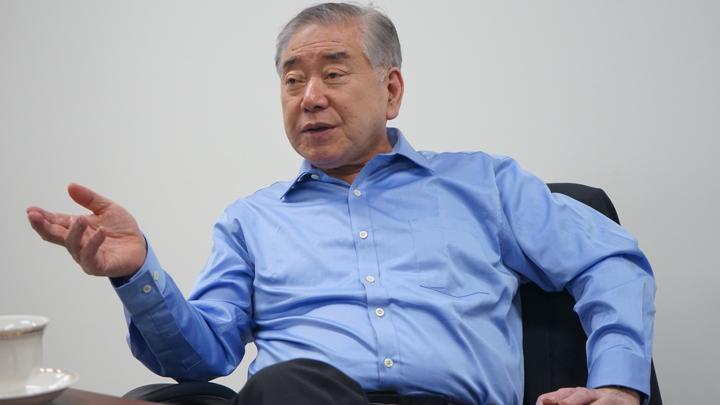
Chung In Moon, a special adviser to President Moon Jae In for foreign affairs and national security
A top adviser to South Korea’s president says he would eventually like to see the U.S.–South Korea alliance end. In language that sounded almost Trump-like, Chung In Moon, a special adviser to President Moon Jae In for foreign affairs and national security, said in an interview that alliances in general are a “very unnatural state of international relations” and said that, “for me, the best thing is to really get rid of alliance.” In the meantime, he says, he “strongly” supports “the continued presence of American forces” in Korea, despite hoping for an arrangement that he thinks would better serve his nation’s interests.
It was a remarkable statement coming from a South Korean official who is playing a prominent advisory role in current negotiations over North Korea’s nuclear program. South Korea has relied on its U.S. alliance since the 1950s to deter threats from its north—and the fate of that partnership, which North Korea has long sought to end, has been a contentious question as a summit between Kim Jong Un and Donald Trump approaches. U.S. and South Korean officials have repeatedly insisted that the alliance is not a bargaining chip with North Korea. And Moon, who presented his ideas as his personal views, was discussing the future of the alliance as a theoretical question about Asia’s security architecture, not as a matter to be determined in nuclear talks. But his comments nevertheless suggested that if those talks succeed and overhaul geopolitics on the Korean peninsula, the alliance could come due for a reckoning. [The Atlantic]
You can read much more at the link, but President Moon is a very skilled politician that needs to keep the Korean right at bay and public anxiety down. If he advocated openly for a USFK withdrawal that would give the South Korean right an issue to strongly attack him with and cause much public anxiety after decades of security guarantees provided by US forces.
However, if a peace treaty is signed to end the Korean War do not be surprised if the Moon administration allows left wing groups begin to put pressure on the US to withdraw. Think of it as a macro version of the current THAAD issue. The left wing groups have protested and sealed off the THAAD site making life difficult for the soldiers there. The Korean government could easily end the blockade, but choose not to. What if in the future if these groups are allowed to blockade and make life difficult for US personnel at for example Camp Humphreys?
President Moon will say all the right things that he supports USFK, just like he supposedly supports the THAAD site, but will set conditions to make it difficult for its continued existence.
This photo shows only a few people enjoying swimming at the Daecheon beach on the west coast on Aug. 5, 2018, as the country has been suffering from a scorching heat wave for weeks. (Yonhap)
You would think this would be bigger news that the South Korean government is intentionally allowing North Korea to violate sanctions using their ports 52 times over the past year:
This file photo shows Yoo Ki-june of the main opposition Liberty Korea Party. (Yonhap)
An opposition lawmaker claimed Sunday that three more foreign vessels suspected of carrying North Korean coal, a banned item under international sanctions, entered South Korean ports 52 times since August last year.
Yoo Ki-june of the main opposition Liberty Korea Party made the claim, arguing that the Seoul government did not take due steps such as the interdiction of the suspicious vessels in line with U.N. Security Council (UNSC) mandates.
Adopted in December last year following the North’s launch of a long-range missile, UNSC Resolution 2397 allows a country to capture and look into a vessel suspected of engaging in prohibited activities with North Korea. Resolution 2371, passed in August last year, imposes a blanket ban on the overseas sale of North Korean coal, iron ore and other mineral resources.
Yoo’s argument came amid media speculation that Seoul, which has been pushing for inter-Korean rapprochement, has not been thoroughly monitoring foreign vessels that enter South Korea with North Korean coal disguised as Russian products, possibly in violation of the sanctions regime. [Yonhap]
It is bad enough that the Chinese and the Russians are helping the North Koreans to bypass the coal sanctions and new the ROK is as well. If President Trump wants to Tweet about something, this should be it.
Expect more articles like this in the future out of South Korea in an effort to try and pressure the Trump administration to drop sanctions against North Korea:
“We cannot go further,” said Moon Chung-in, an influential adviser to the South Korean president. “Why? Because of the sanctions regime.”
There is growing frustration that a slow pace on sanctions could dash renewed hopes for a connection.
“It’s so stressful that the United States is so controlling,” said Song Young-gil, a South Korean politician who recently inspected North Korea’s railways for the president’s office. (……)
But while a west coast railroad would connect political capitals, an east coast line through Jejin would be important for two key areas of Moon’s plans for cooperation with North Korea: trade and tourism.
Following existing tracks, this line would start at Busan, South Korea’s second-largest city and one of the world’s busiest seaports. Train service would run through Jejin and on into North Korea, passing through the Mount Kumgang tourist zone and then Wonsan, a weapons-industry hub converted into a beach resort. The service would continue to Hamhung, an industrial city and the second largest in North Korea.
Eventually, it would reach Rason, an ice-free seaport close to North Korean natural resources. From there, travelers would go on to the Russian border, where there are links to the Russian seaport of Vladivostok and beyond. In theory, a train could continue to Europe on what’s been dubbed the “Iron Silk Railroad. [Washington Post]
You can read more at the link, but this is why South Korea wants the sanctions dropped. North Korea has a number of tourism projects on their East Coast ready for ROK investment and tourists to create a cash cow for the Kim regime. The only thing stopping this are the sanctions. In the article South Korean politicians say that if the US drops the sanctions this will give Kim Jong-un the leverage he needs to get his military to give up its nukes.
Probably the most laughable line in the article is that South Korea experts told the Washington Post that the train line could open up North Korea politically. The Kim regime is not going to agree to do anything that will threaten the stability of their regime. Any tours into North Korea will be highly controlled just like all the other foreign tours into North Korea currently are.
I guess we will see what happens, but expect the South Korean government and their media allies to continue to put pressure on the Trump administration to drop the sanctions on the Kim regime for little to nothing in return.
Via a reader tip comes news that Senator Diane Feinstein had a driver that worked for her for nearly 20 years that was a Chinese spy:
Senator Diane Feinstein
A staffer in U.S. Sen. DianneFeinstein’s San Francisco office was fired a few years back after being linked to Chinese spying in the Bay Area.
According to a Politico Magazine story on Silicon Valley espionage, the Feinstein staffer was suspected of providing political intelligence — but nothing classified — to his handlers, with one former intelligence official telling author Zach Dorfman that the suspected informant was “run” by officials based at the local Chinese Consulate.
A local source who knew about the incident confirmed to us that the FBI showed up at Feinstein’s office in Washington, D.C., about five years ago to alert the then-chairwoman of the Senate Intelligence Committee that her driver was being investigated for possible Chinese spying.
“Dianne was mortified,” said our source, who spoke to us only on condition he not be named.
Besides driving her around when she was in California, the staffer also served as gofer in her San Francisco office and as a liaison to the Asian American community, even attending Chinese Consulate functions for the senator. [SF Chronicle]
You can read more at the link, but the US media has definitely done a good job keeping this quiet. However, it has now come out and of course President Trump has jumped on this news since Senator Feinstein is a leading Democrat involved in investigating Trump over Russian spying.
Here is another example of a forum being used to pressure the US to drop sanctions against North Korea:
U.S. Secretary of State Mike Pompeo (L) shakes hands with North Korean Foreign Minister Ri Yong-ho at a photo session of the ASEAN Regional Forum in Singapore on Aug. 4, 2018. (Yonhap)
The top diplomats of the two Koreas and regional powers engaged in a flurry of diplomatic talks over the past few days in Singapore, although no breakthroughs were made toward Pyongyang’s denuclearization and the proclamation to formally end the Korean War.
This year’s ASEAN Regional Forum (ARF) followed two inter-Korean summits at the Panmunjom truce village in spring and the unprecedented North Korea-U.S. summit in this city-state in June.
It was a sort of prelude to the U.N. General Assembly to be held in New York next month.
The gathering was widely expected to help maintain the momentum for constructive dialogue amid some signs of an impasse in the Korea peace process.
The U.S. is pressing the North to take concrete denuclearization steps, beyond a show of dismantling nuclear and missile testing sites in the absence of international experts.
The North says it has done a lot, and the Trump administration should reciprocate. [Yonhap]
You can read more at the link, but wouldn’t it be great if President Trump responded to criticisms of reciprocating Pyongyang’s so called “good-will” gestures by saying that the US is showing good-will by not bombing them?