

Picture of the Day: Large Meth Seizure in South Korea
| January 31, 2019
This verdict is pretty surprising to me because so much was done to help cover Kim Kyoung-soo’s tracks during the special counsel investigation:

South Gyeongsang Gov. Kim Kyoung-soo was placed under immediate detention on Wednesday after a Seoul court sentenced him to two years and 10 months in prison for his role in a major online opinion-rigging scandal in collusion with a political blogger during the 2017 presidential election.
Joong Ang Ilbo
The Seoul Central District Court ruled that Kim Kyoung-soo was a joint principal offender in the crime along with blogger Kim Dong-won, better known by his internet alias Druking, who was given a three and a half year prison sentence by the same court hours earlier.
The two were found guilty of jointly orchestrating a massive opinion-rigging campaign using a computer program to post and “like” thousands of comments on social media that supported Moon Jae-in’s election bid.
“This crime severely debilitated the healthy formation of public opinion through exchange and debate in an online space,” said Seong Chang-ho, the judge presiding over the case at Kim Kyoung-soo’s sentencing Wednesday afternoon. “The criminality of this case is especially severe since public opinion was mechanically distorted away from the will of the electorate.”
Kim Kyoung-soo’s conviction and jailing marks a mighty fall from grace for a close ally of the administration and a presidential hopeful for the ruling Democratic Party (DP).
He will retain his position as governor of South Gyeongsang for now, even in detention, but will be removed from office if his case goes to the Supreme Court and he loses. Election laws dictate that any elected official who receives a prison sentence or any fine above 1 million won ($895) are removed from their posts.
You can read more at the link, but this verdict can still be overturned on appeal by the ROK Supreme Court. Remember that the Moon administration just arrested the last ROK Supreme Court Chief Justice. Maybe they are sending a subtle message to the ROK Supreme Court to not cross the Moon administration. I guess we will see what happens.
It will be interesting to see if this actually happens:

Early this month, Rep. Hwang Ju-hong of the minor opposition Party for Democracy and Peace submitted a bill that has drawn surprisingly keen public attention.
The proposed legislation, jointly handed in by nine other fellow lawmakers of rival parties, calls for mandatory use of the standard “international” age system at all government and public institutions, while recommending that private sector organizations such as companies adopt the same system for administrative matters.
A source of amazement to many foreigners who are unfamiliar with this country, but otherwise common knowledge to most expats living here, South Korea has kept its unique way of counting a person’s age alongside international age.
The most widely known system, referred to as “Korean age,” is the method whereby one year is simply added to a person’s Western age calculating how many years and months that person has lived since his or her birthday.
So if a man was born on January 1, 1980, he is 39 by the international standard but would introduce himself as being 40 years of age in Korea.
Everyone also gets a year older on New Year’s Day, rather than on their actual birthdays.Yonhap
Such tradition is known to have derived from ancient East Asian thinking that counts the gestational period as part of a person’s age, according to experts. The time in the mother’s womb has been considered as also part of life.
You can read more at the link.
At least one South Korean expert believes that the Trump administration has shifted its focus to getting rid of North Korea’s ICBMs instead of trying to get them to denuclearize:

Any agreement that U.S. President Donald Trump and North Korean leader Kim Jong-un make at their second summit must state that “complete denuclearization” of the communist nation is the two sides’ ultimate goal, an expert said Monday.
Yonhap
Hong Hyun-ik, a researcher at Sejong Institute, made the case in a report amid concerns in South Korea that the United States might settle for a deal falling short of complete denuclearization as long as threats to the U.S. are removed, for instance by dismantling the North’s long-range missile capabilities.
Adding fuel to such concerns was a remark that U.S. Secretary of State Mike Pompeo made in a media interview earlier this month that the “security of American people” is the ultimate objective of the U.S. in its dealings with the North.
You can read more at the link, but as I have been saying for years, the Kim regime is not going to denuclearize. The best they are willing to do is sign up for “pretend denuclearization“. However, verifiably eliminating the ICBM threat is a more achievable goal because the Kim regime has not mastered this technology yet and may be more willing to give it up.
However, the Trump administration should also be trying to get rid of the North’s Intermediate Range Ballistic Missiles (IRBM) as well because those are the category of missiles that threaten the US territory of Guam.
#US_ROK_Alliance #WeGoTogether Most of South Koreans sincerely thank the USFK. pic.twitter.com/WrEaCFirIQ
— 인지연 Jiyeon Ihn (@JiyeonIhn) January 26, 2019

This is probably not the economic advice that most Koreans want to hear, that they need to leave their country and move to Southeast Asia:

President Moon Jae-in’s economic adviser Kim Hyun-chul resigned Tuesday after drawing public ire for saying that young, unemployed Korean language graduates who can’t find a job here should stop blaming “Hell Joseon” and move to Southeast Asia to become Korean language teachers.
Joong Ang Ilbo
Hell Joseon is a term often used to describe how tough Korea can be on its students and graduates looking for jobs amid fierce competition.
Kim, who also teaches international marketing at the Seoul National University Graduate School of International Studies, made the remark on Monday in a speech to local CEOs at a luncheon hosted by the Korea Chamber of Commerce and Industry in central Seoul. The gathering was meant to promote the New Southern Policy, Moon’s ambitious vision of expanding Korea’s influence in Southeast Asia with the promise of treating members of the Association of Southeast Asian Nations (Asean) as diplomatic and economic partners as important to Korea as the United States, China, Japan and Russia.
You can read more at the link.
It looks like the Philippines government is trying to get Koreans to be more polite to their airport staff:
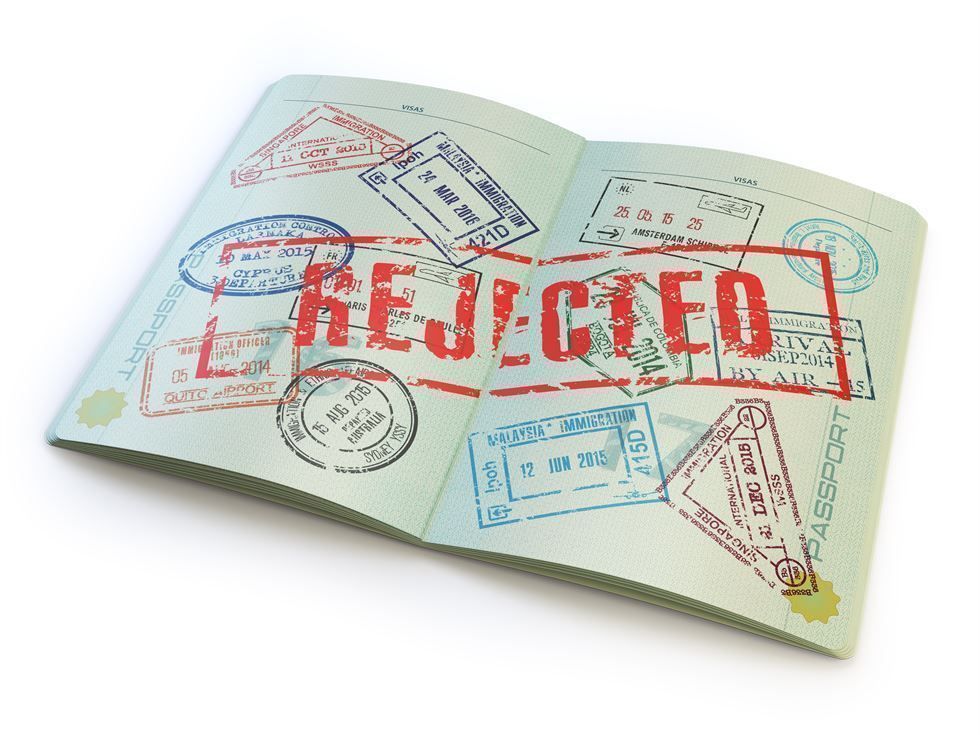
Twenty-three Korean citizens have been banned from entering the Philippines for being rude and disrespectful to airport staff.
Korea Times
According to the Ministry of Foreign Affairs, 23 Koreans were denied entry and blacklisted in 2018 for showing arrogance or using foul language to immigration officers.
“Being on the blacklist means you won’t be able to enter the Philippines for at least one year,” the ministry said on Facebook on Jan. 23.
“To avoid such trouble, please be polite when talking to Philippine officials. If you don’t respond to their questions or raise your voices, you may be denied permission to enter the country. Therefore, you should be able to speak English or have someone who can.”
You can read more at the link.
It makes sense that the Chinese government is using the Confucius Institutes for intelligence gathering and promoting Chinese government propaganda:

As Chinese cybertheft increases and the numbers of Chinese exchange students and scholars rise, officials have stepped up pressure on administrators to take more precautions to guard against espionage and efforts to steal American technologies and research data.
Opponents of the Confucius Institutes argue that such programs give Beijing a toehold in prominent American academic communities to influence attitudes and censor discussions of subjects sensitive to China, such as the Dalai Lama, Taiwan and human rights.
Robert Daly, a China scholar at the Wilson Center who previously directed the University of Maryland’s initiatives on China, dismissed as “nonsensical” the suggestion that Confucius Institutes are hotbeds of espionage. But he and many other experts agree that they are clearly instruments of the Chinese government.
“You can ask why American universities are letting the Chinese Communist Party set up soft-power agencies on their campuses,” Daly said. “A lot of university presidents believed that having a Confucius Institute will somehow curry favor with China such that they will be able to raise development dollars in some way or another. What they find is that it doesn’t create leverage for them, but leverage for the Chinese Communist Party, that if the university does something that the Chinese Communist Party disapproves of, they may withdraw Confucius Institute funding.” (……..)Scrutiny of China’s efforts on college campuses has increased on many fronts. FBI Director Christopher Wray warned universities in February not to be naive about Chinese spies in their midst and said the Confucius Institutes are on his radar. Vice President Mike Pence, in an October speech, accused Beijing of using organizations on campuses to monitor Chinese students for anti-China speech or activities.
LA Times
You can read more at the link.
Why does #Kimjongun appear nearly as tall as Trump in this Yonhap photo? https://t.co/r4v2LgW3pU
— Sung-Yoon Lee (@SungYoonLee1) January 24, 2019
