Probably wouldn't go as far as to say that Korea doesn't care, but it's been notable how comms from the ROK side have been largely siloed to MND, while those from Japan have often come from Abe's circle. One side is clearly eager to make a bigger deal out of this than the other. https://t.co/fLgg2XhQG9
This could get ugly very quickly if the South Korean government decides to forcibly seize assets from Japanese companies to pay for these court rulings:
South Korean victims of forced labor during Japan’s colonial rule have begun taking steps to seize the assets held in South Korea by a Japanese firm implicated in the Japan’s wartime crime.
The lawyers for Lee Chun-sik and three other South Koreans forced to work for Nippon Steel and Sumitomo Metal Corporation recently asked a local court in Pohang, North Gyeongsang Province to issue a writ of execution to have the company’s assets in the country seized.
The company reportedly holds eleven billion won worth stocks of PNR, a joint venture with POSCO.
In late October, South Korea’s Supreme Court had ordered the Japanese firm to compensate the four victims 100 million won each.
Following the top court’s decision, the victims’ lawyers requested that the company answer how it will compensate, but has yet to give a reply.
The major issue here is that the Japanese government says that all compensation claims were paid for with the 1965 pact that saw $500 million from Japan given to South Korea. The ROK government at the time could have compensated everyone back then with that money, however it was instead used for the overall development of the country such as improving infrastructure.
The money ultimately helped with the country’s economic development at the expense of direct compensation to those effected by Japan’s colonial rule. This is why Japan is so strongly against the court rulings they feel they have already paid compensation for.
With that all said when is the ROK government going to launch lawsuits on behalf of victims of North Korea’s kidnappings and provocations in far more recent times than Japan’s colonial rule that began over a century ago?
Here is the latest on the targeting radar spat between South Korea and Japan:
Choi Hyun-soo, the spokeswoman of South Korea’s defense ministry, speaks during a press conference at the ministry in Seoul on Dec. 28, 2018. (Yonhap)
South Korea’s defense ministry expressed “deep concerns and regrets” Friday over Japan’s release of video footage related to an ongoing military radar spat, accusing Tokyo of releasing “misleading” facts. Japan released a 13-minute-long video clip showing the operation of its Maritime Self-Defense Force’s P-1 patrol aircraft to back up its claim that a South Korean naval destroyer targeted the warplane with fire-control radar on Thursday last week. Seoul has rejected the claim, saying that its 3,200-ton Gwanggaeto the Great destroyer did not target the plane of the partner country and that it was on a humanitarian operation to trace a North Korean ship drifting into international waters of the East Sea.
The footage showed an operator of the aircraft communicating a message to the South Korean Navy about its alleged discovery of the destroyer’s radar directed at his plane in a relatively calm voice that observers say did not reflect a sense of urgency. “This is the Japanese Navy … We observed that your FC (fire control) antenna is directed at us,” an operator said in a message sent to the Korean navy. “What is the purpose of your act, over?” he added without demanding that the Korean Navy stop what Tokyo has characterized as a “dangerous act.” A South Korean military official noted that the plane was flying only about 150 meters above the destroyer and around 500 meters away from its side — a flight that could be seen as posing a threat to a foreign Navy. “The reason why we did not lodge an immediate protest against a low-flying plane was that we were focusing on the rescue operation with the thought of it being a friendly aircraft,” the official said on condition of anonymity. “The plane capable of carrying missiles and torpedoes can pose a threat even when it operates from a distance. But it was approaching the Navy ship,” he added. Seoul officials also pointed out that Japan failed to offer a “smoking gun,” namely its analysis of the radar frequency which can verify whether the radar Tokyo claims was used against it was a targeting system. While Japan’s aircraft was approaching the destroyer, the antenna of its fire-control radar, STIR 180, appears to have turned toward the plane, as the Navy tried to identify the plane with an electro-optical targeting system attached to the radar. But the radar did not send out any beam to the plane, Seoul officials have said.
The reconnaissance aircraft was clearly marked as being Japanese and had no missiles on it. The weather was very clear so claiming the aircraft was a threat is far fetched in my opinion. Does anyone have any opinions on who to believe in regards to this spat?
The Japanese are now claiming that its patrol plane was targeted by the South Korean Navy ship multiple times which means this was likely no accident if true:
A diplomatic row between South Korea and Japan escalated for a third day since a South Korean destroyer allegedly locked its radar on a Japanese surveillance plane Thursday during an operation to rescue a distressed North Korean vessel.
A Japanese Defense Ministry official on Sunday said that the South Korean warship targeted a Japanese patrol plane “multiple times for several minutes using its attack-purpose radar.” He reiterated demands by Japan’s Minister of Defense Takeshi Iwaya a day earlier that Seoul apologize for what he called an “extremely dangerous act.”
Iwaya said that the South Korean Gwanggaeto the Great-class destroyer aimed its fire control radar at a Japanese P-1 patrol plane that was conducting surveillance operations over its waters near central Honshu on Thursday.
The Moon administration is saying this all lies and that the Japanese government is using this distract domestic attention:
South Korea voiced “strong regrets” Monday over Japan’s repeated claim that its Navy ship directed fire-control radar at Tokyo’s patrol aircraft last week, a Seoul official said. Korea’s foreign ministry expressed its view during director-general talks with Japan in Seoul. “We have voiced strong regrets that Japan has unilaterally made its own claims to the media,” the official said on condition of anonymity. “The two sides sufficiently explained their positions, but there appear to be gaps in their views. But we have agreed to continue communication going forward, if need be,” he added. On Friday, Tokyo publicly accused a South Korean warship of having targeted its Maritime Self-Defense Force’s P-1 patrol aircraft on Thursday. Seoul rejected the claim, saying Tokyo misinterpreted its naval operation to help a North Korean ship drifting near a sea border in the East Sea. Despite Seoul’s denial, Tokyo has repeatedly raised the issue, sparking speculation that the Japanese government appears to be trying to divert attention from its waning public support.
Reading this Korean government statement has me wondering if the ROK Navy ship locked its weapons control radar on the Japanese aircraft to divert it from collecting intelligence on whatever they were doing with the North Korean ship.
I also find it ironic that the ROK government is claiming that the Japanese government is using the incident to divert domestic political attention when the ROK government regularly uses the Dokdo or comfort women issues to do the same thing.
Korean Gwanggaeto the Great destroyer [NEWS1]
Here is another statement from the ROK government that does not make sense:
South Korea’s Defense Ministry on Saturday dismissed the claims that its destroyer aimed its radar at the Japanese plane, and said that the ship had been carrying out routine operations at the time. A source within the South Korean Navy later clarified that the radar had been used to search for a North Korean vessel that had been marooned for several days off the peninsula’s east coast on Thursday.
The South Korean Navy that day rescued three North Korean sailors off the distressed fishing boat and recovered one body. They were then handed over to the North across the demilitarized zone on Friday.
Though it acknowledged the South Korean navy had indeed been carrying out a search and rescue operation that day, Japan’s Defense Ministry refused to accept Seoul’s explanations over the use of the radar, saying it was not an appropriate instrument for a maritime search maneuver.
As the Japanese Defense Ministry stated, a maritime search radar is different from the weapons control radar. The only explanation that makes sense is that the ROK Navy ship locked on the aircraft to divert it away from their operation with the North Korean vessel. The obvious next question is what was so sensitive about a supposed search and rescue mission that a ROK Navy ship did something as provocative as locking a weapons control radar on a Japanese patrol plane to divert it?
Or could this all just be simple incompetence by the ROK Navy?
Here is another example of South Korea needlessly raising tensions with Japan:
P-1 patrol planes used by Japan’s Maritime Self-Defense Force. Japan said a South Korean warship locked a targeting radar on such a plane Thursday. (Photo courtesy of JMSDF)
Japan’s defense minister protested to South Korea Friday after one of Seoul’s warships allegedly trained a weapon-guiding radar on a Japanese patrol plane over the Sea of Japan. The incident, which took place the day before, resulted from “extremely dangerous behavior that could create unexpected consequences,” Takeshi Iwaya said. He said that Tokyo would “strongly urge” Seoul to prevent it from happening again. The Japanese government lodged a protest with South Korea through diplomatic channels.
This is the first time the Japanese government has publicly leveled such accusations at South Korea. The incident could exacerbate already-strained relations between the neighbors, after a string of South Korean court rulings ordering compensation for citizens who were forced to work for Japanese companies during World War II. At about 3 p.m. Thursday, a South Korean Gwanggaeto the Great-class destroyer locked its fire control radar on a P-1 patrol craft belonging to the Maritime Self-Defense Force, according to the Japanese Defense Ministry. The plane, based out of the Atsugi Air Base in Kanagawa Prefecture, was patrolling inside Japan’s exclusive economic zone off the Noto Peninsula and was “at a distance” from a disputed set of islets called Takeshima by Japan and Dokdo by South Korea, the ministry said.
You can read more at the link, but I doubt this was a mistake considering that South Korea has been busy executing a Dokdo defense drill this month against the imaginary Japanese invasion of Dokdo while ignoring the very real threat of a North Korean invasion.
It looks like the Japanese military is experiencing a growth in female recruits:
Female Japanese junior officers from the Japan Maritime Self-Defense Force visit the National Memorial Cemetery of the Pacific in Honolulu, Hawaii, June 9, 2010. COHEN YOUNG/U.S. AIR FORCE
Japan’s Self-Defense Forces are considering new female training units to accommodate an influx of female recruits that is expected to continue to climb in the coming years, Japanese media reported this week. The island nation is finding it increasingly difficult to accept female recruits with its existing units stretched to capacity, the Jiji Press news agency reported, citing sources with knowledge of the deliberations. As a result, the Self-Defense Forces are considering the addition of new units across the country to accommodate recruits in all three service branches.
Here are some statistical facts about females in the Japanese military:
The Ground Self-Defense Force mainly holds female recruit training at Camp Asaka in Saitama prefecture, Jiji said. It too is considering the formation of a new unit to relieve the pressure on Asaka, but further details were unavailable. The Self-Defense Forces have gone from 144 female servicemembers in its inaugural year, 1954, to more than 15,000 as of March 2018, or 6.5 percent of the total force, according to its website. That number is up 1.6 percent since 2008 and continues to climb, the Defense Ministry’s 2018 white paper added. The ministry plans to eliminate quotas and raise the number of female servicemembers to more than 9 percent by 2030.
Banning Chinese products that could be cybersecurity risks should have been something done 10 years ago, but I guess better late than never:
Japan is set to ban government use of telecom products from Huawei and ZTE over national security concerns surrounding the Chinese companies.
Relevant government agencies will likely reach an agreement as early as Monday to ban the companies from taking part in government procurement, according to local media.
Chief Cabinet Secretary Yoshihide Suga said the move was aimed at preventing cyberattacks and the leaking of confidential information.
“Ensuring the cyber security of government agencies has become increasingly important. We will deal with the matter from various perspectives,” he said.
Defense Minister Takeshi Iwaya also pledged efforts to ensure security.
The move comes days after Meng Wanzhou, 46, the chief financial officer and daughter of founder Ren Zhengfei, was arrested in Vancouver, from where she may well be extradited to the United States. She is suspected of violating U.S. sanctions against Iran.
In Japan the increasing use of English words in subway station names is drawing some criticism:
Following a recent naming trend that mixes Japanese and English words, Tokyo Metro Co. has announced that a new station set to open ahead of the 2020 Games will be called Toranomon Hills.
Toranomon Hills is the name of a skyscraper housing a business complex in the namesake district of Minato Ward. The station is under construction in an area between Kasumigaseki and Kamiyacho Stations on the Hibiya Line, seven minutes on foot from the supermodern, 52-story structure, which opened in June 2014.
The announcement Wednesday came a day after East Japan Railway Co. announced that a new station on the Yamanote Line between Shinagawa and Tamachi stations would be called Takanawa Gateway. JR East’s new station is scheduled to partially open in the spring of 2020, with full operations beginning in 2024. [Japan Times]
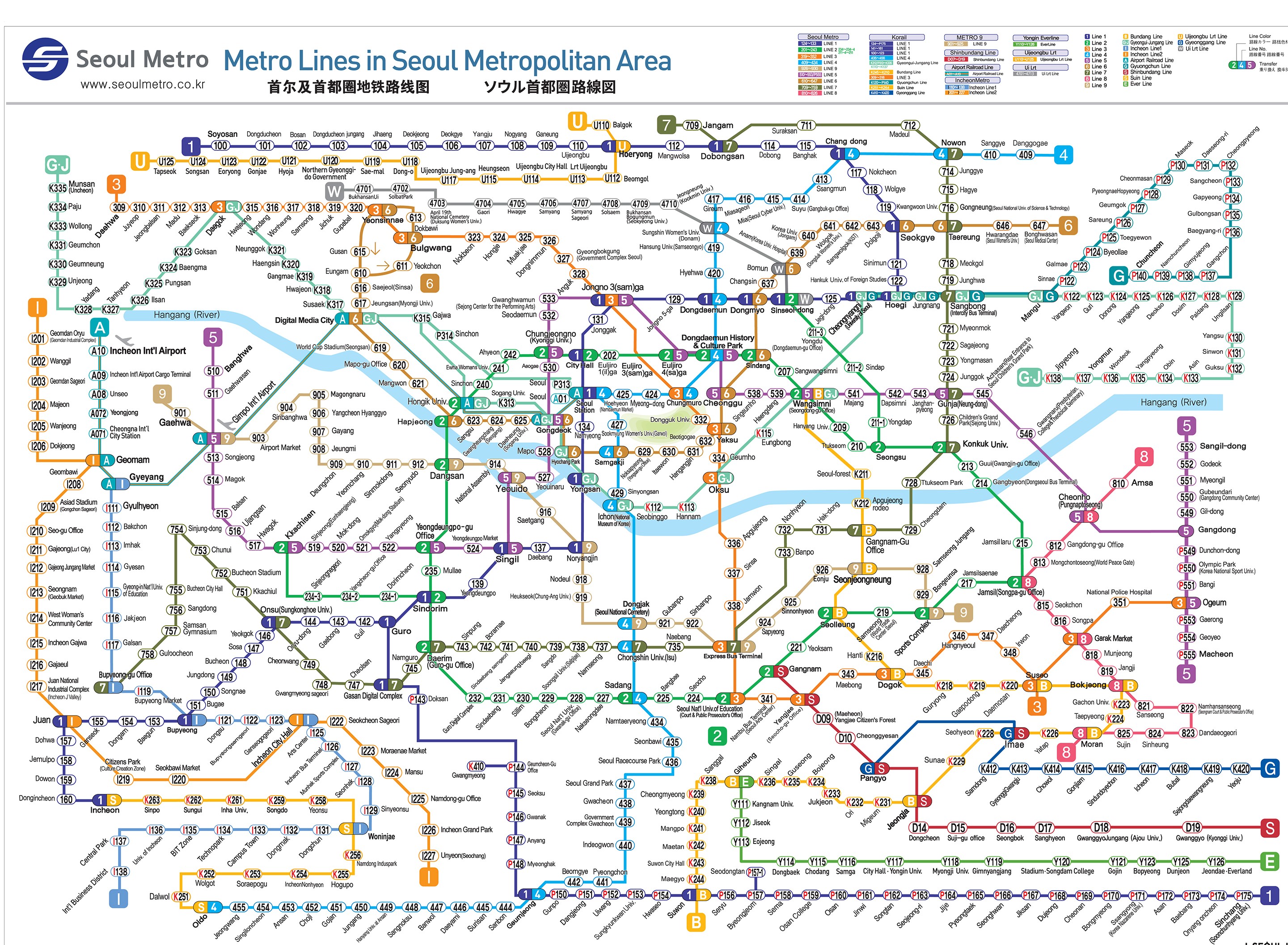
You can read the rest at the link, but it seems to me that using English for stations linked to the 2020 Olympics makes sense. Even nearby Korea uses English words for subway station names in Seoul such as “Seoul-forest”, “Ttukseom Park”, “Konkuk University”, etc.
However, some people have had fun with the English names for Tokyo subway stops by offering these recommended changes:
Does anyone have any good recommendations for changing subway station stop names in Seoul to English? I guess an obvious one would be to rename Itaewon Station to “Hooker Hill Station”.
A KC-130 tanker demonstrates refuels an F/A-18D while F-35B fighter jets fly in formation during the 42nd Maritime Self-Defense Force-Marine Corps Air Station Iwakuni Friendship Day at Marine Corps Air Station Iwakuni in Yamaguchi Prefecture last May. | U.S. MARINE CORPS
Two U.S. Marine aircraft crashed early Thursday during a refueling drill, leaving five crew members missing after two were rescued off the coast of Kochi Prefecture later in the day.
A KC-130 air-refueling tanker and an F/A-18 fighter jet were involved in what the military termed a “mishap” in the early morning hours. One crew member was rescued later in the morning by the Maritime Self Defense Force and sent to a hospital, while another was rescued later in the day, according to the Japanese Defense Ministry. The Marine Corps said the second marine had been transported to a local hospital. One of the two was a crew member of the F/A-18. [Japan Times]
Here is the latest dust up between Korea and Japan:
South Korean foreign ministry spokesman, Noh Kyu-duk, issues a statement on Nov. 29, 2018 in this photo provided by Yonhap News TV. (Yonhap)
The South Korean government urged Japan on Thursday to refrain from “overreacting” to Seoul court rulings against a Japanese firm for wartime forced labor.
“It’s very regrettable that the Japanese government is continuing to respond excessively to our judiciary’s ruling, and (we) call for its restraint,” the foreign ministry’s spokesman, Noh Kyu-duk, said at a press briefing.
He said it’s natural for an administration to respect a court decision in a democracy.
The ministry called in Japan’s ambassador to Seoul, Yasumasa Nagamine, to deliver a direct protest message.
The ambassador did not answer a reporter’s question while entering the ministry building in Seoul.
Hours earlier, the Supreme Court ordered Mitsubishi Heavy Industries, Ltd. to compensate 10 Koreans who worked at its shipyard and other production facilities in Hiroshima and Nagoya in 1944 with no pay and a bereaved family member of another on two separate suits.
The court upheld two appellate court judgments — one that ordered Mitsubishi to disburse 100-120 million won (US$89,000-109,000) to each of four female victims, and the relative, and the other that ordered it to pay 80 million won each to six elderly men.
In Tokyo, Japanese Foreign Minister Taro Kono immediately described the verdicts as “very regrettable and unacceptable.”
He argued that they run counter to the 1965 pact between the governments of the neighboring countries on normalizing bilateral diplomatic ties. He said all reparation issues related to Japan’s 1910-45 colonial rule of Korea were settled through the accord. [Yonhap]
You can read the rest at the link, but the 1965 pact signed saw $500 million from Japan given to South Korea. The ROK government at the time could have compensated everyone back then with that money, however it was instead used for the overall development of the country such as improving infrastructure. The money ultimately helped with the country’s economic development at the expense of direct compensation to those effected by Japan’s colonial rule. This is why Japan is so strongly against the court rulings they feel they have already paid compensation.
With that all said when is the ROK government going to launch lawsuits on behalf of victims of North Korea’s kidnappings and provocations in far more recent times than Japan’s colonial rule that began over a century ago?