judging by the quick reaction by the ROK forces they were likely ready for what was a pretty predictable action by the North Koreans to try and destroy one of the propaganda loudspeakers:
South Korea fired tens of artillery rounds towards North Korea on Thursday after the North fired a projectile towards a South Korean loudspeaker that had been blaring anti-Pyongyang broadcasts, the defense ministry in Seoul said.
North Korea did not immediately respond to the South’s shots, it said, as tensions rose on the peninsula.
South Korea said its detection equipment had spotted the trajectory of a suspected North Korean projectile launched at around 3:52 pm (0252 EDT), which did not appear to have damaged the loudspeaker or caused any injuries.
“Our military has stepped up monitoring and is closely watching North Korean military movements,” South Korea’s defense ministry said in a statement.
South Korea’s military raised its alert status to the highest level.
There was no mention of the firing in North Korean state media, which does not typically make immediate comment on events.
The suspected North Korean projectile landed in an area about 60 km (35 miles) north of Seoul in the western part of the border zone, the defense ministry said. South Korean residents in the area were ordered to evacuate, according to the South’s Yonhap news agency.
Yonhap reported that the projectile appeared to have landed in a mountainous area near a South Korean military base in the town of Yeoncheon. [Reuters]
You can read more at the link, but this will not be the last of the tit-for-tat along the DMZ as the North Koreans have threatened more military action if the propaganda speakers are not taken down in 48 hours. In preparation for more provocations civilians along the western DMZ are being evacuated.
Soldiers of the Neutral Nations Supervisory Commission give a salute during a memorial at the Joint Security Area in the truce village of Panmunjom on Aug. 18, 2015, to pay homage to the two U.S. military officers, who were axed to death by North Korean soldiers at the village in 1976. (Yonhap)
Via the Stars and Stripes comes this YouTube video which shows when the two ROK Army soldiers were hit by the planted North Korean landmine:
Here is what experts in the article had to say about detecting such infiltrations:
A South Korean military official, speaking on customary condition of anonymity, said that while South Korean troops aggressively monitor the border with advanced surveillance equipment and their naked eyes, their ability to monitor some portions of the DMZ is limited.
North and South Korean troops man outposts along the Military Demarcation Line, often in forested areas.
“It’s very difficult to keep watch there for 24 hours a day, especially if it’s rainy or foggy,” said Kim Seongmin, a defector and former North Korean military officer who now heads Free North Korea Radio. “If North Korean troops want to violate the armistice agreement, they can do it there,” he said.
An Chanil, who was stationed at the DMZ as a platoon sergeant in the North Korean army, agreed.
“Nobody can see everywhere,” said An, who defected in 1979 and is now president of the World Institute for Korea Studies, a Seoul-based think tank.
He said ordinary North Korean soldiers would have difficulty crossing the demarcation line, though specially trained reconnaissance soldiers could do so with ease.
You can read more at the link, but this is why any North Korean soldiers caught violating the armistice should be shot on site. In the past warning shots were fired when they were caught crossing the DMZ. It is now time to start attriting their operatives who are specially trained for these missions. That will be a deterrent to continuing to launch such attacks.
The ROK probably should have never stopped clearing shrubbery around the DMZ in the first place considering North Korea’s long history of border incursions and provocations:
Han’s remarks came as the South’s military is preparing to take preliminary steps to pave the way for offensive operations within the 250-kilometer stretch of the four-kilometer-wide buffer zone.
It is considering forest burning in some areas, an operational practice the South decided to stop in 2001 following inter-Korean working-level military talks.
An official explained that burning shrubs will help the military secure a view of North Korea’s guard posts and reconnaissance activities ahead of launching offensive operations within the area. The official said if it is conducted, the burning operation would be carried out in the fall to avoid southerly wind.
Amid such considerations, a South Korea-U.S. joint artillery live fire drill began on Wednesday.
Running through the end of this month, the drill will see the participation of cutting-edge weapons, including South Korea’s K-2 tanks and FA-50 fighter jets as well as the U.S.’ Paladin self-propelled howitzers, Apache helicopters and A-10 attack aircraft. [KBS World Radio]
This photo, released on Aug. 11, 2015, by the Defense Ministry, shows loudspeakers that South Korea has installed at a unidentified site on the western front-line bordering North Korea to resume its anti-Pyongyang propaganda broadcasting. The resumption of the loudspeaker campaign is in retaliation of a the North’s bloody mine detonation on South Korean soldiers on the South Korean side of the demilitarized zone in Paju, north of Seoul, on Aug. 4. (Yonhap)
The height of the “DMZ War” was between 1967-1972 where a number of provocations by the North Koreans killed dozens of US troops. However, if there was an event that could be looked back at as the start of the DMZ War it would probably be the 1963 Jeep ambush. In the early morning of July 29, 1963 three soldiers from A Troop, 1st Recon Squadron, 9th Cavalry Regiment, 1st Cavalry Division were driving down a dirt road 50 yards south of the Korean Demilitarized Zone to relieve a guard post. As they passed over a bridge they were ambushed by a 5-7 man North Korean squad. They used small arms fire and grenades which killed the driver and caused the Jeep to rollover into a minefield. The three soldiers in the Jeep did not stand a chance at being able to defend themselves from this cowardly ambush. The below picture of the acting 1st Cavalry Division Commander Brigadier General Charles Pershing Brown sums up how angry American soldiers at the time had to be about this ambush:
The attack made front page news back in the US because it was the first time the North Koreans had launched an attack on the South side of the DMZ:
Here is how the Stars & Stripes initially reported on the ambush:
What I find fascinating about this incident is that the US responded to the North Korean provocation much the same way we still do today, with United Nations letters and harsh rhetoric that was so famously lampooned in the movie “Team America: World Police“. A follow on Stars & Stripes article would provide further information about the attack to include naming the casualties:
Here is a picture of his flag draped coffin during his funeral in Wisconsin:
Here is another article with a picture of the other deceased soldier Private First Class Charles Dessert:
The wounded soldier from this attack was:
Private First Class William L. Foster, 26 of Baltimore, Maryland
Amazingly Foster survived the attack despite being shot in the chest, hip, abdomen, and hand. Doctors at a hospital set up a Kimpo Airfield were able to extract three of the four bullets. The fourth bullet was lodged next to his spine so the doctors decided to leave it there. What is even more amazing about Foster is that he fought and was wounded at the age of 15 in the Korean War as well:
Here is a picture of him as paratrooper in the Korean War via Getty Images:
He may be the only US soldier ever wounded in both the Korean War and the DMZ War. I could not find out what ever happened to William Foster, but I hope he is living a long life right now to make up for the tribulations he went through in Korea as a young man. He would probably be a fascinating interview if he is still alive and a journalist was able to track him down.
Anyway the next day after the attack that killed Dessert and Seller and wounded Foster, a four man North Korean patrol was found south of the DMZ. The US and ROK forces were able to kill the four man infiltration team, but not before another US soldier and a Korean soldier were also dead:
Corporal Larion was a member of the 1st Cavalry Division and received posthumously a Bronze Star Medal for his actions during the engagement with the North Korean infiltrators. Another soldier, Sergeant Abraham W. McManus also received a Bronze Star Medal during the same attack.
All of this combat happened just two days after the 10 year anniversary of the signing of the armistice to end the Korean War. It was pretty clear that the North Koreans were using the date to send a symbolic message to the US much like they continue to use significant dates to signify provocations to this day. Their provocations today have only been deadly against the Korean military, however as history has shown the North Koreans will attack US military members if they feel they can get away with it. Obviously in 1963 and throughout the DMZ War period the Kim regime at the time felt comfortable that they could commit these provocations with little blow back due to the US being tied down in Vietnam and their support from China and the Soviet Union. If the North Koreans today develop a reliable nuclear weapon capability would they feel confident again that they could launch attacks against US soldiers with little blow back? Time will tell, but for soldiers serving in Korea today, this attack 1963 should serve as a reminder of what the Kim regime is capable of.
For more DMZ Flashpoints articles please click the below link:
DMZ Flashpoints is my ongoing series of articles chronicling the various incidents over the years that have occurred along the Korean Demilitarized Zone (DMZ). A popular saying is that there is no “D” in DMZ and these decades of deadly incidents long the DMZ is proof of that. Using newspaper archives I have been able to reconstruct the events of what happened in these incidents all those years ago. You can learn more about these incidents and the brave servicemembers who gave their lives in defense of South Korea at the below links:
In 1966 North Korea began a campaign to infiltrate increasing amount of communist agents into South Korea along with well trained special operations troops to launch attacks against US and South Korean military forces along the Demilitarized Zone (DMZ) that separates North and Korean War. The goal of North Korean dictator Kim Il-sung was to infiltrate enough agents within South Korea to cause an insurgency against the ROK government while simultaneously sapping the US and ROK military’s morale and initiative. He planned to do by launching ambushes on the DMZ which would also test US resolve in Korea due to America’s heavy involvement in Vietnam. This period of increased conflict became known by those who fought in this shadow war as the “DMZ War“. The list of military provocations during this period against the Republic of Korea government by their rivals in North Korea is a long and extensive one. However, one provocation is clearly the most audacious and remarkable by the fact the communist agents nearly accomplished their mission, and that is the Blue House Raid.
On January 17, 1968, North Korean commandos infiltrated into North Korea with the express purpose of assassinating South Korean president Park Chung-hee. Not only were they ordered to kill Park Chung-hee but they were to chop his head off and toss it into the streets of Seoul. The belief Kim Il-sung had was that by launching a decapitation strike against the ROK regime it would cause chaos within the nation that his communist agents in place throughout the country could then take advantage of by launching a guerrilla campaign against the government in the hope of causing a final regime collapse.
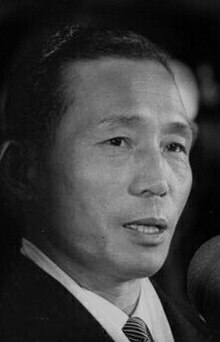
South Korean President Park Chung-hee
The undercover guerrillas would target transportation nodes, TV stations, post offices, police, and military bases in order to cause chaos throughout the country. The conventional North Korean army could then use the guise of an internal uprising against the South Korean regime to legitimize its invasion of South Korea to reunite the peninsula under his rule. However, first Kim had to successfully assassinate Park which would be no easy task.
To do this a thirty-one man assassination team was specially selected from the infamous North Korean 124 Army Unit responsible for most of the infiltration and ambushes launched along the DMZ. These specially selected soldiers trained for two years solely for this operation. Before beginning their mission the team spent their final 15 days conducting mock raids against a full model of the Blue House set up near the North Korean city of Wonsan where their training base was located. Once their superiors were satisfied with their level of proficiency they were immediately sent to execute their mission.
The assassination team was divided into six different teams each commanded by a Captain in order to more easily infiltrate into South Korea. Each team member wore dark overalls, sneakers, a cap, and carried 66 pounds of equipment to include a sub-machine gun, a pistol, grenades, and daggers.
Infiltration
The commando team decided to infiltrate through the 2nd Infantry Division sector near the city of Yeoncheon because it was believed that by infiltrating through the US sector of the DMZ and then successfully assassinating Park Chung-hee that the Korean military would blame the US for the assassination. This in turn would cause tension between the two allies for North Korea’s communist agents to exploit. Each of the North Korean teams were able to successfully breach the DMZ fence and landmines without being detected.
Here is what the only commando to survive the attack had to say about the initial infiltration operation:
At 04:00 on January 18, 1968, 31 commandos crossed the border. (The border fence they cut is preserved to this day). They wore South Korean uniforms and were trained in Seoul accents – “This is the basis of guerrilla fighting!” They removed mines as they went. They halted before a South Korean observation post: Women were going in: “They were not very alert!” Covered in white sheets, the assassins crossed the frozen Imjin River. [Kim Shin-jo]
After successfully crossing the DMZ the six different teams regrouped and began their expected four day march south towards Seoul. For the first two days the commando team was able to successfully march south undetected. Their infiltration mission had gone so well that they even camped out one night just a few kilometers from the major US military installation in the western corridor, Camp Howze.
Fatal Mistake
Initially the commandos had been very luck to not be detected, however their luck would change on the late afternoon of January 19th. On that day the commando team was spotted by four South Korean woodcutters, all brothers working in the mountains. This was a moment where the North Koreans made a terrible mistake.The North Korean commandos had been long taught that the oppressed masses in South Korea were just waiting to be liberated from their puppet government that was backed by the Yankee Imperialists. So instead of killing the woodcutters the commandos decided to conduct an indoctrination sessions with them and teach them the wonders of Juche and the on coming communist conquest that would unit the country and free the oppressed South Korean masses that they figured the woodcutters were part of. It never occurred to them that the South Korean masses were not oppressed and in fact loyal to the ROK government.
To add some context the masses in South Korea were oppressed by the Park Chung-hee regime, but they were no where near as oppressed as the people in North Korea. Remember many of the Koreans during this time frame had lived through the Japanese colonization of the peninsula and knew what oppression was, Park Chung-hee was nothing compared to what they saw before. Additionally Park’s economic policies had brought unprecedented economic growth to South Korea and thus causing the average ROK citizen to be quite happy to put up with some oppression if it meant the continued economic growth of the country. The fact that the commandos were indoctrinated with communist propaganda led to them making a mistake that would ultimately doom their entire operation.
Visitors looking at a crooked pine tree (R) pockmarked with bullet holes that have been ringed with red and white paint, a natural monument to the 1968 raid, at Bukaksan, the small mountain behind the presidential Blue House, in Seoul. Photo courtesy: AFP
After the indoctrination session the woodcutters proudly pronounced themselves converts to the communist ideology which they were then released by the commandos. Once they were released they immediately went and notified the South Korean police of what they had saw. The police notified the South Korean military and a massive counter-guerrilla operation was launched to catch the commandos. However, the South Korean authorities did not know what the mission of the group was and thus could not focus their operations into one area. The commandos were so skilled they were able to easily avoid the perimeter checkpoints by moving in two to three man teams before meeting up again on the outskirts of Seoul.
In Seoul security was much tighter and the commandos took off their civilian overalls which exposed the ROK Army uniforms they wore underneath them. The ROK Army uniforms were perfect replicas and even had the correct unit designation of the 26th ROK Infantry Division sewn on them. They were a mile from the Blue House and decided the best way to penetrate the city’s security would be to do something no one expected, march right through the city straight to the Blue House.
Final Shootout
The North Koreans posed as a South Korean platoon returning from patrol on the city’s outskirts. They marched right through the city right by a number of military checkpoints before arriving 800 meters from the Blue House around 10:30 AM on the morning of January 21, 1968. It is here where the commandos encountered a final police checkpoint that stopped the marching soldiers to question them. The North Koreans fumbled their answers to the questions the commander of the Chongno police station Choe Kyu-sik asked them. Here is how the Chosun Ilbo newspaper described the events that happened next:
But a jeep carrying Jongno Police Station chief Choi Kyu-sik was coming up the road. Choi shouted at the North Korean commandos, “Identify yourselves! What’s inside your coats?” He was taking out a gun to stop them when two city buses came up close and stopped. Mistaking the buses for vehicles that carried police or military reinforcements, the North Korean commandos shot Choi in the chest, tossed hand grenades into the buses, and scattered in every direction. [Chosun Ilbo]
From there chaos broke out as the North Koreans entered into a massive fire fight against the South Korean security forces. A platoon of South Korean infantry had been tasked to reinforce the Blue House’s security and they immediately maneuvered to engage the North Korean infiltrators. It was during this exchange of gun fire that a school bus got caught up in the crossfire killing the women and children aboard. The ROK security forces were only able to get the North Koreans to abandon their mission to kill Park Chung-hee when ROK Army tanks began to rumble down the road towards the North Koreans. With no effective way to fight the tanks, the commandos decided to abandon the mission and fight their way back to North Korea.
Captured North Korean commando Kim Shin-jo
The operation to track down and kill the North Korean infiltrators would end up being even bloodier then the initial fire fight. Both US and ROK military units were mobilized to patrol the South Korean country side to find the infiltrators. More often then not the infiltrators when located would go down in a blaze of gun fire that would claim the lives of even more people. A few of the operatives committed suicide to avoid being captured. The most bizarre death was when one North Korean operatives was captured alive and brought into to be questioned by the Korean National Police Director Chae Won-shik. Unfortunately the police had not bothered to properly disarm the operative who proceeded to pull a pin from a grenade and kill himself and injure the Police Director. Here is how the January 24th, 1968 edition of the Stars & Stripes reported the incident:
Overall, the operation to track down the commandos lasted for nine days where 29 of the infiltrators were killed, one unaccounted for, and only one captured.
The casualties the South Koreans received was steep with 68 South Koreans killed and 66 more wounded. Most of these casualties came during the operation to hunt down the commandos. Of these casualties most were military and policemen, but two dozen of them were South Korean civilians. American forces experienced three soldiers killed and three more wounded in the operation to track down the North Korean operatives. This article from the New York Times suggests that these US soldiers were not killed by the commandos themselves but by other North Korean operatives on the DMZ while the search was going on. The January 25th, 1968 edition of the Stars and Stripes likewise published an article about US soldiers combating infiltrators along the DMZ during the time the Blue House Raid operatives were trying to get back to North Korea:
It was later learned that the one unaccounted for commando had in fact successfully made his way back to North Korea and would later become an Army general. The lone captured commando was a young man by the name of Kim Shin-jo who was on just his second covert mission into South Korea. Much of the details of the Blue House Raid have come from the testimony of Kim Shin-jo. Kim’s statement upon capture was, “I came down to cut Park Chung Hee’s throat!” became a well known footnote of the aborted raid.
Today Kim is far less aggressive and in fact became a Protestant pastor in 1997. Kim received a Presidential pardon for the raid and was released from jail when a forensic investigation determined he never fired a bullet from his weapon. Besides being a pastor Kim is also a hard line anti-Communist:
“What has really changed while the South has been pouring out so much money on the North?” he said. “North Koreans are only becoming hungrier and hungrier while the unilateral support from the South is extending the North Korean government’s life.” Kim said he wants to live “as long as possible” so he can serve as living evidence of North Korea’s spy program against the South. Otherwise, “North Korea will just say they are not responsible for the Jan. 21 incident once I’m gone, like many other incidents North Korea has caused,” he said. [Joong Ang Ilbo]
Interestingly enough there is evidence that Seoul may have captured more than just Kim Shin-jo alive. The below Joong Ang Ilbo article claims that there was in fact 33 commandos sent to kill President Park, but ROK intelligence was able to convert two of them into double agents to spy on North Korea:
North Korea sent two more spies to assassinate South Korean President Park Chung Hee on Jan. 21, 1968, than previously disclosed, a North Korean defector claimed in an interview with the JoongAng Sunday published yesterday.
They were captured alive and sent back to the North as double agents, said the 57-year-old defector, who trained in the 1970s at the same North Korean special military unit as the commandos dispatched to the South. He goes by the alias Hong Eun-taek.
Publicly, the government says 31 North Korean commandos attempted to raid the Blue House in what was one of the boldest North Korean attempts to assassinate a South Korean leader, and all were killed during the raid, except for one, Kim Shin-jo.
“The record left at the unit where I served said that 33 people were sent to the South and two of them escaped [to the North],” Hong said.
Hong served in the eighth battalion of North Korea’s 711 unit in the 1970s, which was the successor of the 124 unit that sent the commandos on the Blue House raid.
He identified the two North Korean commandos who returned to the North as Lim Tae-yong and Wu Myong-hun. Hong said Lim was the chief of the eighth battalion when he was serving there.
He said the two double agents were promoted to two-star or three-star generals after their return to the North.
But they were executed in 1998 when their spying for the South was disclosed.
Hong said there was a widespread rumor in the North Korean military of them being double agents right before their executions.
Hong claimed that another commando was also caught alive, of higher rank than Lim and Wu. The South tried to persuade the three to return to the North as double agents, and they resisted.
The higher ranking commando was beheaded with a farming implement in front of Lim and Wu, and terrified, they signed onto the plan and pledged allegiance to the South, Hong said.
They were returned to the North and told to advance as high as possible in the military, Hong said.
One of the North Korean commandos killed during the raid was indeed found with his head missing. Kim Shin-jo, believed to have been the only survivor, was forced to identify the bodies of his colleagues after the raid.
A Jan. 26, 1968 JoongAng Ilbo article reporting on the incident quoted Kim as saying, “I don’t know [who he is].”
Kim Shin-jo became a South Korean citizen in 1970 and became a Christian pastor in 1997.
The defector who uses the alias Hong Eun-taek defected to the South in 2001. [Joong Ang Ilbo]
Conclusion
The Blue House Raid is quite possibly the most unbelievable provocation between North and South Korea ever since the division of the peninsula. The plan was so bold that it seemed certain to fail, yet these commandos came only 800 yards from completing their mission despite fully alerted authorities looking for them. The Blue House Raid may have been foiled, but the ability of the commandos to so easily infiltrate the DMZ and allude detection demonstrated lacking weaknesses in the security plan and training of both the US and Korean troops.
As bad as these weaknesses were, not all the aftermath of the Blue House Raid was bad. The commandos’ mission was foiled by loyal citizens reporting their movements and one alert policemen who paid with his life for uncovering the commandos. This proved to Park that more then just the military was loyal to his rule, but that South Korean citizens were as well. This incident clearly showed that a true South Korean identity separate from the North Koreans had been formed during Park’s rule in the 1960’s. However, before US and ROK military leaders could even contemplate the negatives and the positives of the Blue House Raid, another crisis would break out two days later; the capture of the USS Pueblo.
On October 31, 1966, US President Lyndon B. Johnson arrived in South Korea to meet with then South Korean strongman Park Chung-hee. This was the first time that President Johnson had traveled to South Korea and President Park was eager to make an impression. Here is how the Stars & Stripes described the seen as President Johnson arrived in Seoul to a crowd estimated at 250,000 people:
SEOUL — President and Mrs. Johnson got a rousing Texas-style welcome here Monday.
They were greeted by an enthusiastic crowd estimated at 2 million as they flew to the Republic of Korea on the last leg of a 7-nation trip.
Officials traveling with the presidential party called the welcome the largest and most enthusiastic of the trip.
At times, the ecstasy almost resulted in tragedy.
Frenzied crowds estimated at 250,000 at Seoul’s City Hall Plaza roared approval at the sight of Johnson so loud and long that the speech of Korean President Chung Hee Park was drowned in the din.
The mob also overran a 2,000-member girls’ chorus near the presidential stand, trampling some of the girls underfoot, and at one time threatened to break Secret Service lines and overflow onto the speaker’s stand.
One 57-year-old Seoul woman was hospitalized with serious injuries after being trampled and 12 persons were treated for minor injuries.
The entire 9-mile motorcade route in Seoul was lined with crowds 20-30 persons deep.
Much of the crowd was made up of schoolchildren waving U.S. and Korean flags and carrying hand-painted signs bearing greetings to the President and First Lady. The city’s schools were closed for the occasion.
The President stopped the motorcade five times to shake hands with Koreans along the route between Kimpo International Airport, where he landed at about 3 p.m., and Seoul’s city hall. Several times along the route, the crowd surged forward past police lines and flooded around the car bearing the two presidents.
At city hall, order among the roaring crowd was restored only after Deputy Prime Minister Key Young Chang personally took charge of police lines and appealed to the front ranks of the crowds.
Johnson told the city hall crowd that Koreans should be “rightly proud” of the rebuilding job they have done after the Korean War leveled the nation, and suggested that Asia was experiencing “a new spirit of cooperation.
“That spirit of cooperation in this part of the world was shared by the seven nations who met at Manila last week.
“That historic meeting, which you first suggested … affirmed the broad partnership and the common purpose of free Pacific nations — a partnership that will endure long after the communist aggression is ended in Vietnam,” Johnson said in his speech.
(“Here in Korea, our fighting men stand with your own along the Demilitarized Zone, and we shall come once again to your defense if aggression — God forbid — should occur here again,” he added, AP said.)
(“To an American, the free soil of Korea is hallowed ground,” Johnson told the throng police estimated at some 350,000.)
(“More than 54,000 Americans died in the bitter 1950-53 battle to save this mountainous peninsula country from communist invaders from the north. Today South Korea has around 45,000 soldiers helping the allied cause in South Vietnam.”)
The two partnership efforts against Red aggression and Korea’s remarkable recent economic progress were main themes of the visit.
Park said Korea had “undiminished appreciation” for the help the United States has given it during the past quarter-century.
“We have been much indebted to you as comrades-in-arms,” he said.
“Please be assured that ours is not a nation which will indefinitely continue to be indebted to others, but rather is a nation which knows how to requite its obligations, which has a keen sense of responsibility, and which abides by good faith.”
At city hall, Johnson was officially welcomed to Korea and presented a gold key to the city of Seoul by Mayor Hyun Ok Kim.
President and Mrs. Johnson were honored Monday night at a state dinner given by the Korean first family at the national capitol. After the dinner they attended an art festival in Seoul’s Citizens’ Hall.
Tuesday, Park and Johnson had a private, 30-minute talk.
Johnson was to visit the Korean 26th Inf. Div. and the U.S. 36th Engineer Group, both near Uijongbu, 13 miles north of Seoul later Tuesday. He was to lunch with U.S. troops.
In the afternoon, the President was to visit an agricultural display at Suwon, 20 miles south of Seoul, where he was also to have a hill named after him.
Johnson will wind up his Far East trip Wednesday with visits to the National Cemetery and Korean National Assembly, where he will give a speech on nationwide television. [Stars & Stripes]
As well as President Johnson’s trip was going, evil was lurking in the background. Early on the morning of November 2nd, the same morning that President Johnson was projected to leave Korea, members of the North Korean 17th Foot Reconnaissance Brigade followed an eight man patrol of US Army soldiers with Company A, 1st Battalion, 23d Infantry Regiment, 2d Infantry Division. The soldiers were patrolling about 1 kilometer south of the DMZ near the Libby Bridge. The North Koreans set a hasty ambush ahead of the patrol and engaged them with hand grenades and small arms fire. After they cut down the patrol the North Koreans shot a few more rounds into some of the bodies and stuck their bayonets in others. Six Americans and a Korean Augmentee to the US Army (KATUSA) were killed by the attack. Incredibly a seventh American soldier, PFC David L. Bibee some how survived the attack by playing dead. Here is what he had to say afterwards:
PFC David L. Bibee . . . 17 years old. He was wounded but escaped death by playing dead. “The only reason I’m alive now is because I didn’t move when a North Korean yanked my watch off my wrist. [Korean War Project]
At the same time of the attack on the US soldiers, a ROK Army patrol was also ambushed killing 2 soldiers. Both attacks were well timed and well executed. The below Google Earth image shows where Libby Bridge is located outside the village of Changpa-ri and where the DMZ fence is located. The ambush would of happened in the hills between the bridge and the fence:
With the attack happening during President Johnson’s Korea trip this caused the attack to make headlines in the US. Here is how the November 3, 1966 Stars & Stripes reported the attack:
This attack along with others during this timeframe would become part of what became known as the “DMZ War“. The North Korean regime led by Kim Il-sung was launching attacks in an effort to test US resolve to defend Korea during the Vietnam War. He hoped the attacks would create a wedge between the US and ROK alliance while simultaneously sending in operatives to create an insurgency within South Korea. Fortunately Kim Il-sung’s strategy failed, but it cost the lives of the following men in the 2nd Infantry Division patrol ambushed on November 2, 1966:
Benton, Johnny Wayne 2 Nov 66. Vermont.
Burrell, Robert Wayne 2 Nov 66. Mt. Ayr, Indiana
Fischer, Morris Lee 2 Nov 66. Wisconsin.
Hasty, Leslie L. 2 Nov 66. Palestine, Texas.
Hensley, James. 2 Nov 66. Stockridge, Michigan.
Reynolds, Ernest D. 2 Nov 66. Missouri. P
Myong, Pfc Hwan Oh 2 Nov 66. KATUSA attached to A Co. 1/23 2ID Camp Wally
Robert Burrell
Of note is that Private Reynolds who was Killed in Action during the ambush, was nominated for the Medal of Honor and was awarded the Silver Star and the Purple Heart. He had only been in Korea 17 days. Ernest D. Reynolds was born October 13,1946 in Maryville, Missouri to Lowell D. and Joyce A. Reynolds (died 2011). In 1958 the family moved to Northeast Kansas City, Missouri. Ernie went to Whittier Elementary and graduated from Northeast High School in 1964. In 1986 the family was in Seoul for the dedication of the Reynolds Range. He is buried in Oak Hill Cemetery, Maryville, MO. Private Reynolds is survived by his siblings Melody, Roger and Sharon. Here is his Silver Star citation:
The President of the United States takes pride in presenting the Silver Star Medal (Posthumously) to Ernest D. Reynolds (US-55881470), Private, U.S. Army, for gallantry in action while engaged in military operations, while serving with Company A, 1st Battalion, 23d Infantry Regiment, 2d Infantry Division. Private Reynolds distinguished himself by gallantry in action on 2 November 1966, in the Republic of Korea, by sacrificing his own life in the defense of his fellow soldiers. Private Reynolds was a member of a patrol operating near the southern boundary of the Demilitarized Zone in Korea when his patrol was attacked and overrun by an armed patrol of the North Korean Army. Prior to the attack, as rear security man, he had occupied a concealed position and opened fire upon the enemy, and he continued to fire until he himself was killed. His indomitable courage, determination, and profound concern for his fellow soldiers, are in the highest traditions of the military service and reflect great credit upon himself, the 2d Infantry Division, and the United States Army. Department of the Army, General Orders No. 16 (April 4, 1967) Home State: Missouri Personal Awards: Silver Star (Korea-1966), Purple Heart.
The Korean War is known as the “Forgotten War”, but for the soldiers that served on the Korean frontier during the “DMZ War” their conflict should be known as the “Really Forgotten War” since so few people know about it. Fortunately the 2nd Infantry Division today is beginning to embrace and remember the brave soldiers who served on the frontlines of the DMZ War. It is because of the service of the brave men that served in Korea during this time period that Kim Il-sung’s strategy was thwarted and South Korea was able to develop into the thriving democracy and economic miracle that it is today.
For more DMZ Flashpoints articles please click the below link: